Facebook Pinterest Instagram Bloglovin' Teachers Pay Teachers Image Map
Showing posts with label inquiry. Show all posts

Differentiated Instruction in the STEM Classroom {w/ iTeachSTEM}


Most teachers agree that differentiated instruction is essential in helping students to master concepts, but the reality is that implementation can be challenging when faced with a class of students with a variety of needs and abilities.

In my classroom, most of my instruction is done whole group. There is very little time - nor is it always appropriate - for small group instruction. As a STEM teacher, I rely on three main methods of differentiating my instruction to meet the needs of all students in my room.

1. INQUIRY
I strive to include many opportunities for students to experience the information. They complete various exploratory activities - often before any formal instruction - allowing them to develop a common experience to draw from as we move through the content.  Students work alone, with partners, and in small groups to make observations and discuss their findings.

2. MULTIPLE APPROACHES
Not every student learns the same way. I think we all agree on this. My goal is to deliver the essential content ideas in as many different ways as possible. I include lecture, video clips, music, close reading passages, hands-on activities, vocabulary study, simulations, and more. I even have students become experts on a small portion of the content and "teach" the class. By addressing big ideas from multiple perspectives and through engaging activities, I am able to reach more students than if I stuck to one approach.

3. CHOICE
When students are working on a STEM Challenge, they are given the opportunity to approach the problem in ways they select. While I do give a basic set of constraints, students are allowed the freedom of choice in how they develop and present their solution. Even though everyone in class is working to solve the same problem, the way that they are working on the problem may not be the same. By asking open-ended questions, teachers can guide students through various problem based learning experiences. This real-world connection and opportunity to collaborate with their peers (with teacher guidance) is an essential skill that must be developed in our students.


As teachers, it is essential that we have a solid understanding of the big ideas, core concepts and overall learning expectations in order to assist students as they build a basis of understanding for themselves. We must be mindful of the purpose behind a certain learning activity or task in order to direct students toward a common goal of content mastery. Teachers can adjust resources, groupings and instructional methods to target specific skills leading to a classroom of students who are challenged and engaged in the learning process.

Student Led Learning in Kindergarten

My last few years in the classroom I really tried to achieve a more student led classroom, however I have had a really hard time wrapping my mind around how to achieve it on a day to day basis. Because I am extremely type A, I like to plan everything out the best I can, not to mention letting go of controlling the classroom and the content often goes against everything I learned in college. But I know that by focusing on shifting to a more student led classroom students become more engaged, independent, self aware, and able to find and run with their passions.

One way I have tried to "let go" and give my students more control is through the use of inquiry learning. Using this model I still take time to build background with my students on a topic, but then I really listen to the questions they want to investigate and those questions are what fuels our future learning. 

January is when we begin to dive deep into inquiry with our Antarctica unit. After reading and learning more about Antarctica, students decide what they'd like to investigate further.  Some students may wonder what it is like to visit Antarctica while others want to know what penguins do all day.  We then make a plan to find out more through books, videos, classroom guests, and even video chat when we can. Here are some pictures of our learning:


We do spend time discussing what collaboration should look like, how to be a great group member, and what to do when things aren't going so well in a group. But overall, I am always amazed at how well students come together and collaborate on their final projects. Kindergartners have tons of passion about their learning and it shows when they are given ownership over their learning choices.

  Want to know more? Here is an example of how I run a 3-4 week inquiry unit on the butterfly life cycle:


You can find this pacing guide and everything else you need for this butterfly unit here:

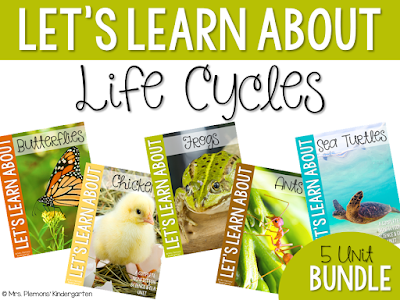
And other life cycles here:

I hope you will give student led learning a try in your classroom, even if it is just for one part of the day, you will soon become a believer like I did! Happy investigating!


Professional Development Books Worth Reading {Comprehension & Collaboration}

I don't know about you but I never have the time during the school year to read all the great professional books that I hear about throughout the year.  I usually have an ongoing list of like 20+ books I want to check out and can't wait until summer to read. So here at The Elementary Entourage we want to bring you some of our suggestions that we have read and loved.  These books have made huge changes to our teaching and we'd love if you'd check them out and let us know what you think!

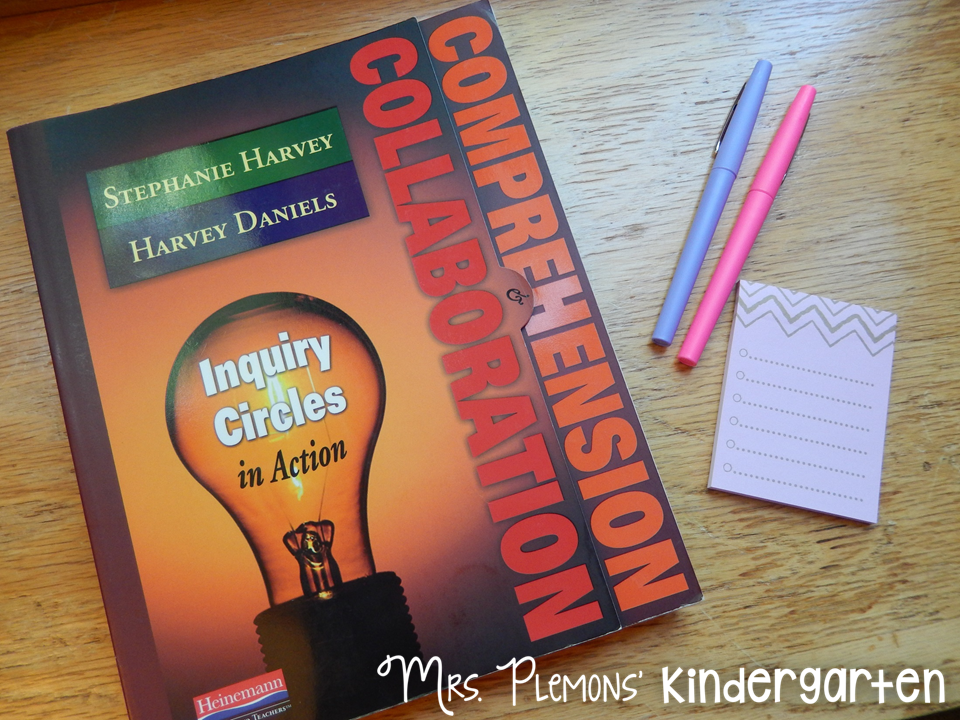
I am in full summer reading mode and spent the weekend reading 2 great new books for the book studies I am a part of this summer. Teaching with Intention with our very own Greg from The Kindergarten Smorgasbord and Learn Like a Pirate with Amanda from The Primary Gal. I am loving both books, and will be sharing all about them on my blog over the next 2 months.  But for now I wanted to share a book that I read a few years ago and has really changed the way I think about student collaboration in the classroom, "Comprehension & Collaboration: Inquiry Circles in Action" by Stephanie Harvey and Harvey Daniels.
If you are considering trying out small group inquiry or project based learning in your classroom then this book is for you.  I could go on and on about all of the amazing things in this book, but to really get the most out of it you will definitely want to grab your own copy.  Our school district bought us a copy, but I went out and bought my own after I left because that's just how much I love this book and I knew I would want to keep it and use it in the future wherever I end up.

Here is just a quick run down of what you will learn in this book:

  • Why should we shift from teacher led classrooms to more student led small group inquiry projects? Students need to be involved in their learning! We need to move past the outdated passive, coverage approach to education and help prepare students to think, collaborate, and drive their own learning.
  • How to create an effective learning environment for active learning, including how to effectively use technology.
  • explanations of 4 different types of inquiry models: mini-inquiries, curricular inquiries, literature circle inquiries, and open inquiries. There are great real classroom examples of each that span K-12 with great ideas to get you going.
  • Tips for assessing, evaluating and managing inquiry circles.  I'm not going to lie it is rough getting started when you are used to having so much teacher control, but the results are so amazing and totally worth it when you see the deep thinking, understanding and motivation in your students.
  • And last but not least 27 lessons in comprehension, collaboration, and inquiry (AKA pretty much the best part of this book ever!) Seriously, these lessons are a fantastic starting point if you are new to teaching collaboration, comprehension and inquiry.  
Here's a peek at a few of my favorite lessons from the book:
 For comprehension, I love this lesson that emphasizes thinking, questioning, and learning from pictures.  When you teach kindergarten, you know the struggle of students finding information when they can't read more complex texts yet.  So this lesson helps my students understand how to find information even before they can read!
 All of the collaboration lessons in this book are great, and I revisit each of them often, but the most important ones are definitely the first turn and talk lesson, and the Showing Friendliness and Support lesson.  These lessons teach students how to talk to and encourage each other in the classroom. This is the foundation for successful inquiry in the classroom.
And one of the best inquiry lessons is the first lesson as well in which students create research notebooks.  My kindergartners loved writing in their research notebooks because they felt so grown up and it really helped them keep track of their work.  For me these notebooks were a great way to assess their progress and see the great work that they were doing.

Do you use inquiry circles or project based learning? Have you read this book? I'd love to hear your thoughts, ideas, and questions in the comments. Happy summer reading :)