Facebook Pinterest Instagram Bloglovin' Teachers Pay Teachers Image Map

Flipped Homework {The Learning Chambers}


Yes, I do send home homework.  I think it's a great way to involve parents in helping their child at home.  I send home a weekly homework calendar and I have flipped math lessons for homework.  I'm super excited to share with you how I handle homework in second grade.

Homework Binder
My kids really struggle with organization!  On top of the organization struggle, there are so many folders that have to go home and on certain days.  It's too confusing!  My school has a folder that goes home every Monday, a homework folder that goes home Monday through Thursday, and I had a behavior folder that went home daily.  It was too much and I decided on a much easier system with the help of my old teaching neighbor, Judy.  The kids have a binder that they take home Monday through Thursday.  It stays at school on Fridays so that I can stuff it with graded work, new homework, and notes.  I punched holes in the Monday folder that my school requires and it stays in their binder and never leaves.  You can kinda see it sticking out of the top of the binder :).  I needed a name for the binder that translated into Spanish easily for my teaching partner and so we named it our Eagle Binder to match our school mascot.


Homework Calendar
Each week we send home a new homework calendar and we punch holes in it so the kids can put it at the front of their binder.  The kids do their homework on loose leaf notebook paper and return it on Friday.  Since I teach in a Dual Language classroom, the kids do homework in English and Spanish.  Their Spanish spelling words will go in the blank rectangles at the top.  Here is an example of our homework calendar that my amazing partner created.


Flipped Lessons
Did you notice the math homework?  That's right I do all my math homework on Edmodo and I love it!  I've been creating math lessons for my kids using camtasia and the kids watch them as their math homework.  At the end of each video, the kids have to answer questions that they answer on their loose leaf paper.  Then, they click submit to turn in the assignment.  That helps me see which students need to watch the video and complete the questions in class.


I post one video a week and I've been getting great feedback from both students and parents.  The great thing about using Edmodo is that they have a mobile app that most students can access on their parent's smart phone.  The kids that don't have access have the opportunity to watch the videos during our station time or on Thursday mornings before school, when they have their morning library time.


As the year progresses, I hope to use Edmodo for almost all of my homework.  The kids really enjoy responding and getting feedback faster than the pencil and paper homework.  It's also much easier to keep track of and stay organized.  I hope to post more about Edmodo and my Flipped Learning classroom in future posts.

I hope you enjoyed reading about how I handle homework in my second grade classroom.


Kindergarten Homework {from Keri at Enchanted Kinder Garden}


This is a very controversial, well can be, topic in school.

Homework.

To give or not to give? Well, I stand on the give side. I actually love homework. I think that homework in kindergarten provides them with the routine at home for studying, practicing working at home, and gives their parents that relationship to build a bridge between school and home. I’ve had parents ask so many times how they can help there child at school. Complete everything that I give you in the homework binder. What do I include? Here’s a quick look into my kids’ homework binders this year.

I make the binder something that becomes a staple. From the beginning, I include a bag of books, an alphabet chart, numbers, color words (depending on the child), the homework, weekly assessment sheet and a snappy word ring (sight words).


This bag is the reason that I use a binder. My former principal purchased these for the student pencil bags, but they are HUGE. They came with a strip inside of it to hang in crates. We ended up using them to store headphones. I also used them to store books to go home. They are kinder proof (well almost), big enough to store readers AND almost waterproof. The material that the white part is made of pretty much allows liquids to roll right off. I don't worry much about spilled water in backpacks getting on the books. My kids get new books every week. They can choose to read which ever book that they like at home. This is ALWAYS a hit to see which books they'll get next.

I send home a letter with the homework binder explaining all of the parts. As certain students master certain skills, I’ll take it out of their binders and replace it with new things. When a child has mastered the letter names and sounds, I usually add in a nonsense word fluency sheet and a letter naming sheet to practice on their fluency. We are starting DIBELS again this year so I’ll be doing this in a few weeks.


The homework sheets are actually the morning work sheets from The Printable Princess.


I take out the 1-10 numbers and add in 11-20 when students are ready for these. As the year progresses, I may change this to a hundreds chart. I provide parents with ideas on how to use the 100’s chart. They may circle a number and tell the child to count on, play a guessing game with what number am I thinking of (greater than, less than), count by 10’s and so on. The homework binder ends up being individualized for that particular student. Everyone’s looks the same, but what’s inside is a little bit different.


The snappy word ring is the same way. I use Rainbow Words from Hello Literacy. In the past, I went with her word list. This year, used the editable versions and made my own lists that go with our progression. I added the first 14 words as RED words. With rainbow words, they will work on a group of words until they have mastered all of the words. Then, they get a new set of words added to their ring in the next rainbow color. They are trying to make a rainbow of words. I like this MUCH better because it is individualized as well. I don’t have to worry about putting too much on my students that can’t learn them as fast as others. Yet, I can push my higher kids to learn more words and be exposed to more words while they are with me. This system worked wonders when I first used it two years ago. I tried something quite different last year, but decided to use this in my tweaked version this year.


This is the assessment sheet that I have from a few years ago. I forgot to snap a picture of the current one and this just so happened to be at home. A few years ago, our team decided that we wanted to hold parents and students accountable for the skills we were learning every week. We came up with a quick and easy assessment. I keep it in their folders. It lists five weeks of skills. I have a letter skills which will eventually change and show the word family, blends or whatever phonics skill we are on. I have a math skill. It currently has number identification. I also list the sounds. On Friday mornings during our Golden Ticket Free Play time, my kids are playing and I have free time to assess them one-on-one. It’s super quick and I just put a check next to each thing that they mastered. If it is not mastered, I just highlight it. The parents have to initial on the following Monday that they’ve seen it. This helps parents to help their children at home. It’s really difficult to jot down what parents need to help their child with week by week and be specific. I can tell a parents that Jessie need to work on sounds, but when they see that /m/ and /p/ are highlighted, they can work on those two sounds. This is also VERY helpful for me when report card time rolls around. I pull these sheets back out and refer to them. I can see if there is a trend, what I need to focus on with certain kids as I’m planning for the next week and so much more.


That’s pretty much it. I love sending home homework and hope that whatever makes you happy is the decision that you should use for homework with their kids. Do ALL of my kids do homework nightly? Of course not. I think it makes them accountable.

To Give or Not Give...Homework {in Mrs. Dailey's Classroom}

Hey Friends! I'm excited to talk with you about this topic because it's one that I love talking about... I've been teaching for a while now and in the beginning, I was unsure of what the right about of homework to give to my students was. I'll start by saying this, what I talk about today is my opinion. It's not researched based and it may not be the answer that everyone agrees with - but that's ok, because we can talk it through together!
I have found that in second grade, there is no reason to bog the kids down with hours of homework. There is a need, however, to begin the homework routine (if they have never had it before) and to prepare them for the homework they will be getting in third grade. I assign two major pieces of homework a night.
 
1. Reading for 20 minutes
2. A math worksheet or 5 minutes of math fact practice
 
 
Let's talk about the reading: I explain to the parents at open house that this can be done together and parents can read their children (of course!!!). Modeling how to read is helping young ones to read! As the year continues, the students begin to read to their parents or to themselves.
 
 
Now, the math: I only assign math problems that the kids know how to solve. It isn't the parents job to teach second grade math (that's my job!). Of course, there are going to be students who need their parent's assistance, but the homework is always something that the kids have been exposed to at school.
This is a peek at what the students would be bringing home on a typical night. If the students need a book, I allow them to take one from my library as long as they bring it back. The math sheet is from Second Story Window and I highly recommend their homework pack!
 
The biggest point that I would like to stress to you is that I don't make homework too fancy. It's reading and math. In my opinion, homework should be practice of the skills students are repeatedly working on with me in the classroom.
 
Thanks for stopping by today! Don't forget to come back tomorrow to see more tips on homework!


To Give or Not to Give...Homework {A Kindergarten Perspective}

So I'm going to be completely honest here people...I'm not a huge fan of homework for little ones...especially kindergartners! More and more free time, recess and social interaction is being taken away from our littles and they really need it! So that being said I try to encourage parents to give their children time to be active and get outside after school.  But inevitably, so many parents actually beg for homework. I mean it is great to see that they want to be involved in their children's learning, so its hard to argue with that.

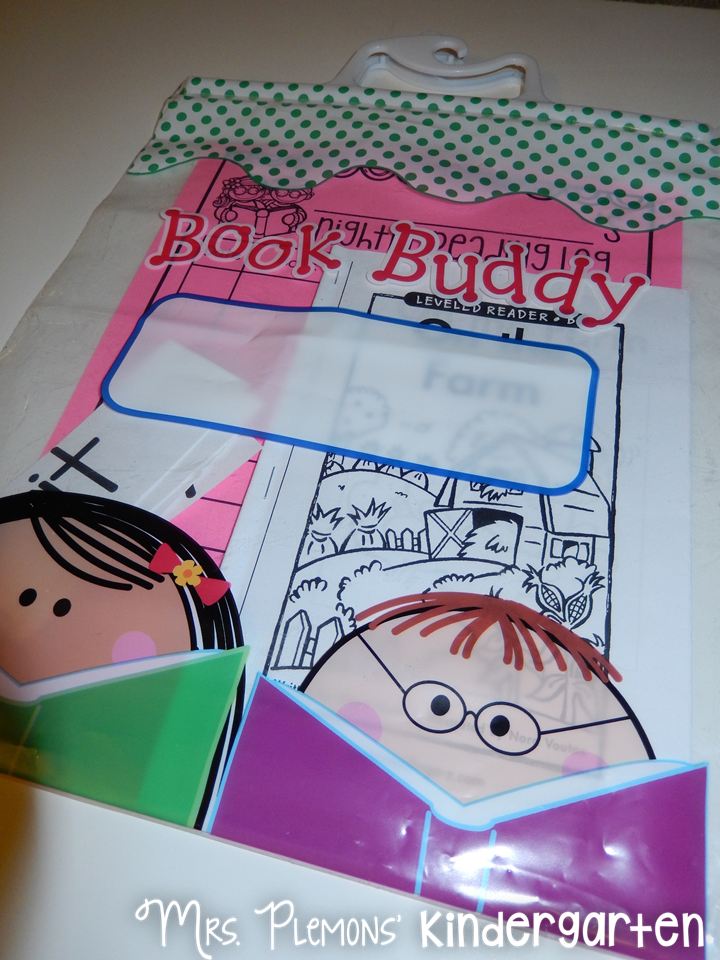
My solution is nightly reading homework which realistically should take no more than 10-15 minutes/night.  Totally doable on the car ride home, or while mom is cooking dinner. Here are what my reading bags look like:
And here is what's inside:
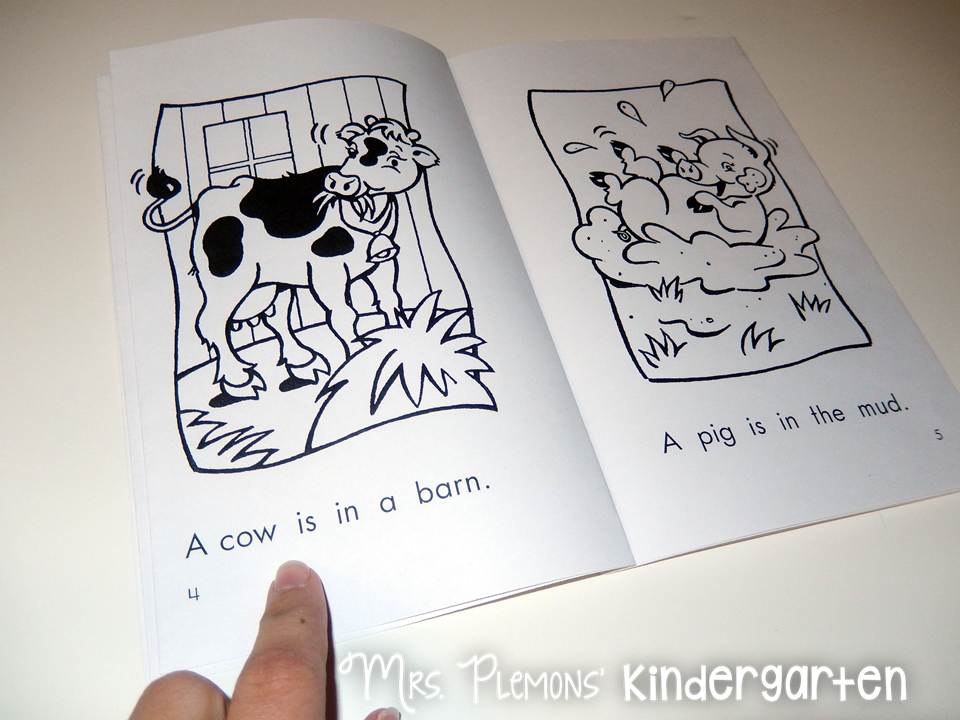
First, I include a leveled reader that is at students INDEPENDENT reading level, not instructional.  I do not want my students to struggle through their homework anymore than I want parents struggling to help their child read.
Now don't get me wrong there are definitely parents that are great at coaching their kids through a book, but there are also those that say "sound it out" 392 times when the word is "some" and can't possibly be "sounded out."  So I send books that students will feel successful with as fluency practice.  I use the printable books from Reading A-Z because I don't have a huge leveled library in my classroom. Unfortunately no matter how hard I try to teach my kiddos to take card of the books, inevitably some get lost, come back missing pages, have their baby sister's beautiful artwork all over them, fall in a toilet, or whatever other kind of mayhem happens in real life with a five year old.  I do ask students to bring the books back, but I have printed 5 copies of each book from Reading A-Z and bam no worries when they go missing, I just print more!
Next is a nightly reading log.
Every night that students read, they write the date and title of their book. (Side note: I like to encourage students to do it themselves for a little extra writing practice, especially those with some fine motor issues.) Then parents sign and when I see it at school they get a sticker. There are 10 spots on a page so if a student reads every night they fill it up in two weeks and get to chose a Reading A-Z book to take home to keep! That's right the prize is more reading ;) The best part is they can actually color in their book when they take it home....ooooohhh. They're always dying to color those little readers so this is actually  big deal in their little world. Gotta love kindergartners!
You can grab my printable reading log FREE here.
The last thing in the bag is a sight word ring.  At my school we teach 2 sight words a week and expect our students to know 75 by the end of the year.  I add 2 words to each bag each week and students add them to their ring when they get home.  After reading their book each night I ask them to  quickly practice their sight word ring.  Every so often as I reassess the words my students know I will go through and the words off of their rings so they don't grow to be too big. No need to drill the same sight words they've known consistently for months!
And there you have it! Easy peasy homework in kindergarten.  I will say that I do have a small packet of worksheets that I send home with students in case parents really want some more work for their kiddos, but I don't really spend much time checking it in or looking through it.  I find that those pages are more for students to practice and show their parents what they can do, so I try not to spend too much time dealing with the paperwork of it all. The packet usually includes handwriting page, a sight word page, a math page and a writing prompt each week. Nothing too fancy!

Back to School Bash!

I hope you are all getting your school year off to a great start! Here at the Elementary Entourage we want to share our favorite lessons, tips, ideas and freebies for back to school to help you during this crazy time of year.  Stop by each of our members blogs to check out what they have to share with you this week!

Then make sure you are following each of us on Instagram because we have a big surprise for you coming this weekend!


My Lesson Planning Style {Tickled Pink in Primary}

I'm hope you have gotten a lot of ideas so far of how to organize your weekly, monthly, and yearly lessons. I liked to do my lesson planning in the middle of the week for the following week. This gave me a few days to make copies, laminate, and prepare for the week ahead, without having to come in on the weekend. I used to get to school about 1 hour early, use my prep period to work, not talk :) and was able to leave about 15-20 minutes after school ended. Don't get me wrong, I socialized with colleagues, but I also tried to use my time wisely. Being organized and prepared will save you hours of time at school. 

My last district had all the grade level teachers form committees to work on a curriculum map so every school was teaching the same thing at the same time. This uniformity in your corporation helps students that move around in the district. Here's a peek into how we set our Kindergarten curriculum. It was a lot work to get to this point, but now that it done, it is SO helpful! We have the time frame, skills, vocabulary, mini-lessons, mentor text, standards, extra resources, etc. already listed for us. How amazing is that?!?
Below are more detailed lessons that I would create for myself. I could probably just teach off of the curriculum maps, but I like to have it all spelled out and in 1 spot. 
At the beginning of the school year, I teach 1 nursery rhyme a week. That is something that I add in that is not in the curriculum maps, but they are just too fun to not teach. I do a variety of activities during the week to practice the nursery rhyme, sight words, sequencing, retelling, comprehension, etc. You can find these activities for 10 popular nursery rhymes in my Nursery Rhyme Bundle
One thing that saves me a ton of time is having my literacy and math centers all planned out for each month. I use similar games, so I can quickly change out a center for the new skill, and the students will already know the game format and directions. Creating and preparing centers can be very time consuming. I have bundled all of my literary centers into one bundle here and all of my math centers into another bundle here
 
I hope you have a great school year and that we have helped you find ways to save time and energy when lesson planning.

My Lesson Planning Style as a Technology Facilitator (Kim from For a Love of Teaching)

Hey y'all! I hope you've had a wonderful start to a new school year! I'm here today to talk a little bit about my lesson planning style from the view of a Technology Facilitator. Lesson planning for me has taken on a whole new look and meaning this year! I've moved from 4th grade to Technology Facilitator, so I'm no longer planning for one grade level. Now, I'm planning for grades 1-6. I also teach from the computer lab, so I no longer have a "classroom" of my own.

I teach all grade levels every day. At my school we follow an A, B, C, D schedule. Each classroom (First Grade - Sixth Grade) is assigned a day - Day A, Day B, Day C, or Day D. Each class visits the computer lab on their assigned day. Basically, I see one classroom from each grade level daily. We average 4 classrooms per grade level, however we have three grade levels with 5 classes each. In this case, one classroom splits their class four ways so that those students can also visit the computer lab.

When it comes to lesson planning I have to be one week ahead at all times. I do this by meeting with each grade level on a regular basis (sometimes it's just over e-mail). I try really hard to collaborate with teachers and integrate their curriculum into my digital lessons I teach in the lab. I follow their pacing guides closely, and I try to plan lessons that correlate with what students are learning in their classrooms.

I use my Erin Condren Planner and the Perpetual Calendar that came with it to keep a running list of ideas and topics for each grade level.

The Perpetual Calendar is perfect for listing topics/ideas that I want to make sure I cover during a particular month.

As you can tell...I'm still planning September! However, I have topics and ideas listed all the way through February for various grade levels. Each time I meet with grade level teachers, I take this calendar with me. I add to it as we come up with new ideas and ways that I can help implement the curriculum from the computer lab.

I use Planbook.com to complete my lesson plans. My school requires all teachers to use Planbook, and this is our 2nd year using it. It has it's pros and cons, but so far I love it! Here's a snapshot of last week.


I like to have my lesson plans in front of me, so this was one of the things I didn't like about Planbook to begin with. However, each week I just print my lesson plans out and put them in a binder to keep on my desk.


I can't erase or move lessons around, (one of the cons of digital lesson plans) but I do make notes and check off items. I use the notes section on the right side to make a list of reminders or to modify a lesson. Can you see where I've written "too hard...modify!" Ha-ha! This is my first year as a Technology Facilitator, and since I've only worked with 4th graders for the past 10 years I tend to over plan, or I take for granted what younger students can and can not do! Next year, I'll look back at these lesson plans and hopefully my notes will help me! :)

What's your lesson planning style? Do you use Planbook.com? If so, let us know how it's working for you! 

Have a great school year!!!