
Facebook Pinterest Instagram Bloglovin' Teachers Pay Teachers Image Map
Showing posts with label lesson planning. Show all posts

Differentiation in the Classroom for your Teacher Evaluation Rubric!


You can google differentiation and see tons of ideas, photos and lesson suggestions. You can seek new ways to improve your techniques and approaches to reach new learners or ones you feel you haven't reached enough. I do it, visuals are my daily PD. I have ideas or questions and I search. I need to see models or how other educators do things since I'm in my own classroom all day. This is great! But, when it comes to being marked on your evaluation, differentiated instruction means more!

This blog post is going to share a suggestion for differentiating in your classroom when it involves best practices with your Teacher Evaluation Rubric. My suggestion will show you an easy way to understand your Teacher Evaluation Rubric with differentiation. 

Differentiation on your Formal Teacher Evaluation Rubric

Every teacher is evaluated on a series of components based on multiple formal and informal observations each school year. Every teacher has a component of differentiation as a piece to their yearly evaluation. What I am clarifying here, is we as K-12 educators are all evaluated the same way but by a different tool with different wording depending on where you work. 

As a Reading Specialist and prior Literacy Coach, teachers always came to me about their rating in this category. Their questions always came back to the same thing...

Teacher: "I'm using my reading level data to form my small groups!" Me: "Awesome, that's great! You are delivering direct specific instruction based on your formative data of where the children are in reading level growth."
or
Teacher: "I'm using my quarterly formative data to form my small groups! Me: "Awesome, that's great! You are delivering specific instruction based on your formative data of standards your students are missing."

Sound familiar? Well, the above examples are truly great teaching! But, it's only part of the component of differentiation. It is the part of the component in your evaluation that is predicted differentiation based off of data. 

But there is another part and it sounds easy, but it's tough. It is usually the difference between obtaining the highest rating in differentiation or not.

Have you seen this on social media? This image is from TeachThought!

(click the photo for a direct link)
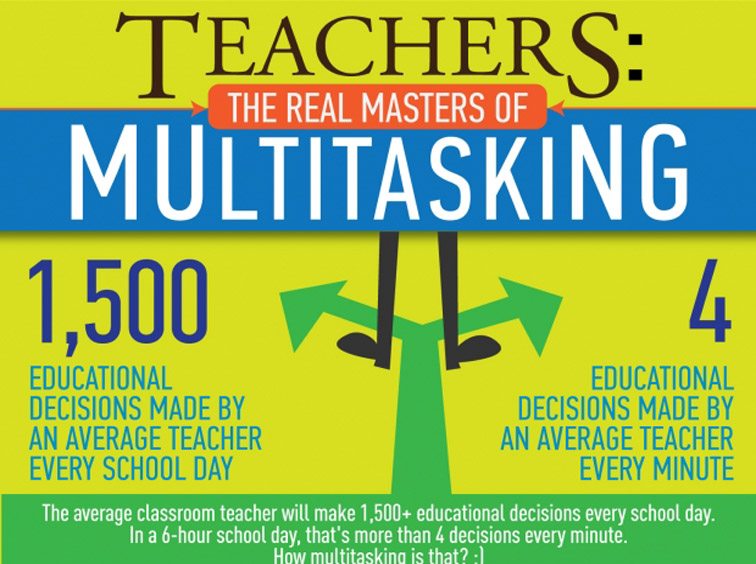
Image result for teachers make decisions a day

It's true, teachers make so many minute by minute decisions a day about everything. Now apply this to a lesson!

Let me make it a little clearer and break it down:
  • When planning a mini lesson you need to add an area to your plan. Title it something like anticipating misconceptions, re-teach, etc...
  • Plan for students to not master your lesson standard or objective [Yes, plan for failure! Plan the reality, everyone is not perfect the first attempt]. In this plan note exactly what you will do that day for students with misconceptions or failures. Then note what you will do the next day if misconceptions or failures continue.
  • Now, prep resources for this group of students [Regardless their formative data or reading level.] Have a little area or spot at your small group table for this random group. This random group will be in the moment so you will need to be ready. You don't know exactly who will have misconceptions this day. It could be your low kid or your high kid.
  • Do your whole group lesson. During the lesson activity, have documentation of some sort by your choice. This can be in the form of anything anecdotal like a status check, roster, standard checklist, etc... By oral and visual observations note and rate who has it, who kind of has it and who does not have it. This can be any rating system you want. 
  • A big key... The students have to also be self assessing. Students need to rate themselves. This could be by a number rubric, color rubric or etc... You need to see how students internalize their work as well in comparison to the expectation. 
  • Now, the work period is ending. This is when you will send those who found success on to their independent time, stations, centers, etc... You will pull the students with misconceptions. It will end up being an immediate intervention in a way prior to starting your regular scheduled differentiated groups based off of reading level data or formal data.
(The same concept applys for Math!)

This is differentiation in action, planning for misconceptions with instant instruction to remediation then and there. Why is this hard for teachers? Well, time! Time to plan for your mini lessons and small groups is enough. Now your adding planning ahead for the unknown as well. But, I feel it is challenging because it's hard for people who evaluate using these fancy formal teacher rubrics to explain in a simple form to teachers. There's no real model for it unless you receive PD that is real and not from a PP or you happen to observe it yourself. Lastly, it's a game time in action observation. So it's hard to share with teachers what this would look like. 

Of course, after this first group is done. Then you would continue on with your differentiation instruction of your "current" small groups based off of your formative and reading level assessments. 

If you are effective at doing "differentiated instruction" you need to be doing the known and the unknown. You need to be doing the preparation for what you know the students need based off of large pieces of data and you need to be doing the preparation for what you don't know your students need based off of regular daily mini lessons. 

Lastly, you need to have documentation to show your evaluator because they are not available every day to see this in action [I think photographs are better to show!]. Evaluators would like to see this on lesson plans noted and to see how you document to grab those students with misconceptions and intervene. 

This is tough, I hear ya! Sometimes I think teacher is not a good job title for us! Maybe juggler, physic or something else would explain what we really do all the time! I think this shirt explains it all!
(click on the photo or HERE for a direct link)

I hope this blog post gave you some insight that you can apply and you have found it helpful!

Teacher Time Savers {Powerpoints}


As teachers, our time is very valuable. We spend lots of time looking up ideas and strategies to keep our kiddos engaged. We try to use every single minute while the kids are in our care to make sure they are provided the most of their time. However, we all know that every single day does not go as planned. How do you make the most of it in your classroom? I have a few ways I try to save time in my classroom.

My first little timesaver is teaching my kids all that I want them to know about their iPads within the first month of school. What is it that I teach them exactly? Well, here's a quick list:

- teach how to take a selfie (This teaches them how to find the camera. I also show them the shortcut to find the camera by swiping up.)
- teach how to record a video (This sets them up on recording their recording later on.)
- teach how to record a partner (They get extra practice recording others and practice using video)
- teach them how to login to any apps that require a login. (We put a sticker with their username and password on the back of each iPad.)
- teach them how to do a QR code (They will be able to use this for SeeSaw, listening centers, qr codes on their recording sheet and any other things that you use your QR codes for.)

After you've taught them everything that you want them to do, they're set for the year except for any new ideas you come across.

I know I've probably mentioned this idea before, but it seriously is life and classroom changing. I teach through a PowerPoint for reading. I have my entire morning routine in a PPT. Now, everything that I say and do is not in that powerpoint, but it helps to keep me on track. I made it ONCE and just change a few things and reserve for each day of the week. Let's look at my PPT from last week.

The very first slide is always our good morning song. We usually greet each other and tell one thing that happened the night before or something from the weekend if it's Monday. We also talk about a goal that we have to make sure we have a great day. This is usually only about 5 minutes. I have this already up and on the board as they walk into the room. We wait for announcements and the late stragglers and then get started immediately.

Next, I get up to do the snack and my calendar helper goes through our calendar routine. This way, I'm not wasting their time and we're accomplishing something that can easily be done by a kid. I still watch, but am getting office things ready. The calendar helper writes in all of our information and then leads the class in counting up until today on the calendar, saying the days of the week and the months of the year.


That's what most of our calendar area looks like. My calendar helper fills in all of the blanks each morning. You can grab this calendar set freebie over on my blog, Enchanted Kinder Garden as well as some more goodies in that same download.

If you have a wireless mouse, you could also click through the PPT without being at your computer. So let's say someone walks in your room during the song, click easily and then the calendar helps gets right up to do their job and your class never misses a beat.

The next slide is always our phonemic awareness. I put the objective down at the bottom so if anyone ever walks into our room, they'll easily know the skill we're working on. This is also AMAZING to leave for a substitute. I leave an old laptop anytime a sub comes. It doesn't connect to the internet, but has the PPT for the day or days that I am away.

The PPT also includes our book, essential questions, phonic skills, high frequency words, pictures of sheets that they have to complete and everything! It literally takes me about 20 minutes to get this done for the week. It's part of my lesson planning routine and saves me SO much time during the week.

I also add in videos or links to the videos if I'll be showing a short video as well. That way, I don't have to click out, go to an internet browser and find what I need.

I have mentioned this as well, but it is my FAVORITE timesaver of all. I set my Daily 5 rotations on a timer in my PPT as well. I usually set it for about 12 minutes. I have a chime that goes off when it changed. My kids know that this means clean up. However, the group that is at my table does not leave just yet. I keep them for the minute or two that everyone else is cleaning up. This way, I maximize the time I have with that group and the rest of the kids are able to transition without me actually doing or saying anything.


Just click above to download a template.


Cramming It All In & a FREEBIE {w/Tickled Pink in Primary}

Trying to squeeze as much learning into your day as possible and keep your students engaged can be hard. I think that we are putting so much pressure on students and increasing the expectations, that sometimes we forget that they are kids. 
I try to balance my schedule throughout the day, so we have some whole group learning, then small group or independent work, then back to whole group, and small group. This breaks up the learning a bit and gives students some time to interact with their friends. My schedule is the same every day so students know what to expect. They know when they'll get a chance to talk/share with their friends, and when it's time to listen to me.  I see my students checking out a picture schedule often to see what is coming next or how many things we have to get through until recess. LOL! Having a set schedule every day is easier for me to lesson plan because I can just quickly change out a skill, book title, etc. but overall I have a plan of what our day will always look like. You can grab these schedule card for FREE here
As a Kindergarten teacher, I think is important to let our little ones get a little bit of down time throughout the day. They still need to develop social skills and shouldn't be expected to just go, go, go all day long at the age of 5!  I have reading centers & math centers during my day so students can work on the skills I've taught, but do it by playing games/activities with their friends. Our reading centers are in the morning and our math centers are in the afternoon. Here's a picture of my reading center rotation chart. All of my supplies are right by the reading center (same for math), so students don't have to go all over the room looking for their tubs/materials. I also have 1 person in each group as the designated person to get out the tubs & clean it all up. This helps the transitions go smoother and not cause any arguing.
Inside each tub are a few activities for the students to do. I let them choose what to do, but once they've played the game once they have to switch to another activity. These low-prep Beginning Sounds activities are easy to prepare and great to throw in centers.
BINGO markers are definitely a favorite activity to do, so I created these Dot It! worksheets for reading & math centers. I love creating centers that can be used all year long, and all you have to do is simply change out the worksheets/cards. They kids already know how to play, so this makes lesson planning and explaining new centers a breeze!
Assessments are a necessary evil. It's something we all have to do, to see how our students are progressing, but it also takes time away from us teaching the rest of the class.  One way to constantly and quickly progress monitor my students on their letters is with this letter fluency sheet from my low-prep Alphabet Activities bundle. I can pull kids back and have them do this 1 minute assessment to see how many letters they know and if they know them quickly and fluently. As student's scores increase, I only have to do this with a few kids. In Kindergarten we don't do real grades or give homework that we keep grades on. I dread report card time because even if I mentally know how my students are doing and what they need help on, I still need to pull them all back 1 on 1 and give them a lot of formal assessments. This takes quite a bit of time! I don't have a classroom aide, but I try to do most of my assessing while the other students are at centers. I also like to use some of our center activities as assessments as well. I can sit with a group of kids as they are working on an alphabet game and I can take notes on which letters they are missing. This is more of an informal away to assess, but it doesn't interrupt the schedule of the day, and students are more relaxed and not feeling like they are getting quizzed by the teacher. :)
Fluency & Fitness is definitely a class favorite! These students below are working on naming their 3D shapes (shapes & real world images included), but then they have to do exercises every so often. They absolutely LOVE doing these and forget they are even learning. :) I love that I've found a way to make learning fun, help them get some energy out, yet not lose instructional time. There are over 40 bundles of Fluency & Fitness, so we can use these during math & reading, and all year depending on what skills we are learning.You can find this Shape Fluency & Fitness here.
It's tough trying to cram it all in, yet make learning fun. Sometimes we just have to trust our gut and do what we know is best for our kids.


Cramming it all In {from Aloha to Second}


This is my sixth year of teaching, and I am getting closer to making a schedule and routine that will work for my class. 

One thing I do is post the schedule each day.  This is helpful for me and for my students.  I write the time next to each activity to help me stay on track.  I can't even begin to explain to you how much this has helped me!
After we complete an activity, we place a dot next to it on the board.  For my kiddos that have a hard time focusing or getting through the day, this is super helpful for them.  They can then count down how many more activities we have until lunch or a special or the end of the day.  It also stops them from asking me when we will go home. :]

This is my little teaching area at the front of the room.  I have my basket of goodies/resources and all my teaching books.  I also use my handy clipboard to place my lesson plans for the week. This is great for me to keep everything together.

If you are interested in checking out one of my lesson plans for a week, you can click on the picture below.


You can also check out my daily schedule by clicking on the image below.  We have specials at a different time each day, so it makes scheduling a little difficult.  However, I do the best I can! 


Cramming It All In: Full Day Schedule in Kindergarten

Are you having trouble finalizing your schedule? Too many things to cram in to every day? I hear you! Every year this is probably one of the hardest things for me to figure out, so I want to share how I fit everything I need to teach into every day.

Here is a peek at what my weekly schedule looked like my last year in the classroom:
Now let me break that down for you just a little bit...

AM Routines/WTW Sort


The first thing my kiddos do every day is pretty typical. They hang up their things, bring in their folder, hand in any notes/homework, pick their lunch and have a seat.  After that I used to have morning work printables at their tables to work on but then we started using Words Their Way and I had to figure out how to fit this program into our day. My students get a new sort every Monday during our literacy block so Mondays are the only morning that they have a typical worksheet for morning work. Every other day they work on their word sort. (Tuesday: Cut & Sort, Wednesday: Sort again, Thursday: Sort & Write, Friday: Sort & Glue in journals) If they finish early they read books quietly.
Intervention

Then we have a school wide intervention time. This is the time that we really get to focus on our RTI students. Because this intervention time is school wide, our specialists, educational assisstants, SLPs etc are all able to help. This makes it possible for the students with the highest level of need to be in smaller groups, while students not in need of intervention are able to work with specialists in larger groups on enrichment activities.

Writing Workshop

We follow Lucy Calkins Units of Study for Writing so this one is pretty set each day. I do use individual goal setting with my students as well.  You can read more about that here.

Math

Everyday we start our math block with this awesome calendar journal from Growing Kinders. Then we complete a daily math journal from my math journal pack here:
Then my students work in small group with me, or on one of our math centers.

Daily 5

I use the Daily 5 model for our literacy block and I have to say it is one my favorite times of the day.  My students are always nice and calm during Daily 5 which is why I moved literacy to the afternoons.  Math centers always got so crazy when students were all wound up from lunch and recess, so moving them to the morning was also a great decision.  

Inquiry

Our district was moving towards an inquiry based approach to teaching in the content areas which I loved, but still had to put my kindergarten spin on it.  I always taught thematically.  I enjoyed it, the kids enjoyed it, so I tried to find a way to make that work with the inquiry model.  Here are the themes I used.

Read Aloud

I always end the day with a read aloud.  As students pack up their bags and get ready to go, I begin reading.  This helps quiet students down so my room doesn't turn into a zoo.  It also gives me something purposeful to do for the last few minutes while students are being picked up for buses, or after school programs. I try to pick a chapter book that relates to the season or themes we are learning about. I choose frog and toad at the beginning of the year so that students get used to the routine with shorter chapters that often have a few pictures to share.  Later in the year I read Charlotte's web, Charlie and the Chocolate Factory, etc.

Hopefully this was helpful to you in some way. I know I am always curious to see how other teachers structure their day, and usually get ideas for tweaking my own schedule as well.  Happy planning friends!

My Lesson Planning Style {Tickled Pink in Primary}

I'm hope you have gotten a lot of ideas so far of how to organize your weekly, monthly, and yearly lessons. I liked to do my lesson planning in the middle of the week for the following week. This gave me a few days to make copies, laminate, and prepare for the week ahead, without having to come in on the weekend. I used to get to school about 1 hour early, use my prep period to work, not talk :) and was able to leave about 15-20 minutes after school ended. Don't get me wrong, I socialized with colleagues, but I also tried to use my time wisely. Being organized and prepared will save you hours of time at school. 

My last district had all the grade level teachers form committees to work on a curriculum map so every school was teaching the same thing at the same time. This uniformity in your corporation helps students that move around in the district. Here's a peek into how we set our Kindergarten curriculum. It was a lot work to get to this point, but now that it done, it is SO helpful! We have the time frame, skills, vocabulary, mini-lessons, mentor text, standards, extra resources, etc. already listed for us. How amazing is that?!?
Below are more detailed lessons that I would create for myself. I could probably just teach off of the curriculum maps, but I like to have it all spelled out and in 1 spot. 
At the beginning of the school year, I teach 1 nursery rhyme a week. That is something that I add in that is not in the curriculum maps, but they are just too fun to not teach. I do a variety of activities during the week to practice the nursery rhyme, sight words, sequencing, retelling, comprehension, etc. You can find these activities for 10 popular nursery rhymes in my Nursery Rhyme Bundle
One thing that saves me a ton of time is having my literacy and math centers all planned out for each month. I use similar games, so I can quickly change out a center for the new skill, and the students will already know the game format and directions. Creating and preparing centers can be very time consuming. I have bundled all of my literary centers into one bundle here and all of my math centers into another bundle here
 
I hope you have a great school year and that we have helped you find ways to save time and energy when lesson planning.

My Lesson Planning Style as a Technology Facilitator (Kim from For a Love of Teaching)

Hey y'all! I hope you've had a wonderful start to a new school year! I'm here today to talk a little bit about my lesson planning style from the view of a Technology Facilitator. Lesson planning for me has taken on a whole new look and meaning this year! I've moved from 4th grade to Technology Facilitator, so I'm no longer planning for one grade level. Now, I'm planning for grades 1-6. I also teach from the computer lab, so I no longer have a "classroom" of my own.

I teach all grade levels every day. At my school we follow an A, B, C, D schedule. Each classroom (First Grade - Sixth Grade) is assigned a day - Day A, Day B, Day C, or Day D. Each class visits the computer lab on their assigned day. Basically, I see one classroom from each grade level daily. We average 4 classrooms per grade level, however we have three grade levels with 5 classes each. In this case, one classroom splits their class four ways so that those students can also visit the computer lab.

When it comes to lesson planning I have to be one week ahead at all times. I do this by meeting with each grade level on a regular basis (sometimes it's just over e-mail). I try really hard to collaborate with teachers and integrate their curriculum into my digital lessons I teach in the lab. I follow their pacing guides closely, and I try to plan lessons that correlate with what students are learning in their classrooms.

I use my Erin Condren Planner and the Perpetual Calendar that came with it to keep a running list of ideas and topics for each grade level.

The Perpetual Calendar is perfect for listing topics/ideas that I want to make sure I cover during a particular month.

As you can tell...I'm still planning September! However, I have topics and ideas listed all the way through February for various grade levels. Each time I meet with grade level teachers, I take this calendar with me. I add to it as we come up with new ideas and ways that I can help implement the curriculum from the computer lab.

I use Planbook.com to complete my lesson plans. My school requires all teachers to use Planbook, and this is our 2nd year using it. It has it's pros and cons, but so far I love it! Here's a snapshot of last week.


I like to have my lesson plans in front of me, so this was one of the things I didn't like about Planbook to begin with. However, each week I just print my lesson plans out and put them in a binder to keep on my desk.


I can't erase or move lessons around, (one of the cons of digital lesson plans) but I do make notes and check off items. I use the notes section on the right side to make a list of reminders or to modify a lesson. Can you see where I've written "too hard...modify!" Ha-ha! This is my first year as a Technology Facilitator, and since I've only worked with 4th graders for the past 10 years I tend to over plan, or I take for granted what younger students can and can not do! Next year, I'll look back at these lesson plans and hopefully my notes will help me! :)

What's your lesson planning style? Do you use Planbook.com? If so, let us know how it's working for you! 

Have a great school year!!!