Facebook Pinterest Instagram Bloglovin' Teachers Pay Teachers Image Map
Showing posts with label schedules. Show all posts

Cramming It All In {w/ iTeachSTEM}

With growing class sizes, challenging standards, and increasing demands on our time, it's necessary to be a master of manipulating time. Cramming learning into every possible activity.
Teachers are experts at fitting a TON of content into every little minute of the day. We have to be. With growing class sizes, challenging standards, and increasing demands on our time, it's necessary to be a master of manipulating time. Cramming learning into every possible activity.

With that being said, I will admit. I struggle BIG TIME with this. I have sooooooooo many awesome ideas. I have sooooooooooo little time to teach each class. This leads to soooooooooooo much rushing throughout the day. My poor fifth graders hear me say, "We have so much to do and not enough time to do it!" almost every single day.
With growing class sizes, challenging standards, and increasing demands on our time, it's necessary to be a master of manipulating time. Cramming learning into every possible activity.
So what can a teacher do?
How can we compete with the increasing demands on our time without giving up what really matters? Teaching our students. Not just the content standards, but how to be responsible. Kind. Courageous. Honest. Caring. Adventurous. Trusting. Wise. Careful. The list really goes on and on and on.

I've found that the best way to squeeze more time out of the day is to be sure to set up specific routines early in the year. This may seem like a no-brainer, but I swear that as a new teacher ten years ago I had no CLUE how important this was. I actually assumed my 10-year-old students would kind of figure it out. HA!

Over the years I have tried so many strategies. And let's face it - there is NOT a one size fits all answer. As a fifth grade teacher who is responsible for instructing four class periods each day as well as lunch, recess, specials, assemblies, etc. I have had to be creative with my time. Here are three ways I have found to help "cram it all in" each day.

I know that a lot of teachers swear by "morning work" and I can totally see how this would be an awesome use of time. However, at my school students are provided with breakfast to eat in the classroom each morning and some students don't arrive until a few minutes before the bell rings. Also, since I only have my homeroom class for those 15-20 minutes, my other three classes would miss out on that morning work time - especially since I would want to use class time to review what had been done.
With growing class sizes, challenging standards, and increasing demands on our time, it's necessary to be a master of manipulating time. Cramming learning into every possible activity.
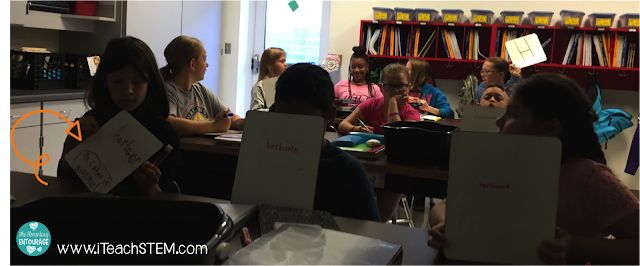
Since my schedule runs more like a middle school, with students rotating every 70 minutes, I find that doing a quick bell-ringer type activity works much better. Students are trained to answer various types of questions on their white boards (quickly) and flash their answers on my signal. This is a great way to start class since it gives students a moment to get organized and join in as soon as they are ready. It also allows me to assess their understanding of the subject matter before jumping into the lesson. (I kinda love that one student also wrote "Mrs. Coker is awesome" on her board.)
This year, a new law was passed in Tennessee. Students MUST be given a certain number of minutes of physical activity per day. Recess and PE are great, but we needed to add a bit more into each day. As a teacher who already struggles to "fit it all in", I wasn't too sure how I would be able to include more free movement each day. Don't get me wrong, I know the importance of physical activity and even agree with the idea of adding an extra recess each day. But HOW could I give up precious instructional time without falling behind quickly?
With growing class sizes, challenging standards, and increasing demands on our time, it's necessary to be a master of manipulating time. Cramming learning into every possible activity.
I decided to do some brain breaks throughout my lessons - especially on days when they are more "lecture intensive" and students are required to listen and take notes for the majority of the class. And you know what? I haven't been running out of time! Students seem to be better able to focus after a quick break. I still get through my lessons. And I am in compliance with the new law. Win-win-win!

If you teach older students like I do, you're probably thinking that so many of those cute little brain breaks all over Pinterest just wouldn't get your kiddos up and excited. Yeah. You're right. I tried a few and they flopped. Mostly my students wanted a chance to talk, walk about, giggle a bit, and stretch. But if I just gave them "free time" I would likely never get them refocused. So I use a lot of science "rap" songs from YouTube during my lessons. Students are allowed to dance, sing, or tap out a beat while the song is playing. BUT, when it finishes, they are responsible for answering some questions related to the content of the song. I love this compromise. If you teach science, feel free to check out this Pinterest board where I collect my favorite science (and a few math) songs.

Some days I just don't have a good song, so I grab my stack of brain break cards and challenge the students to something silly like writing their names on the air using the end of their nose. Not only does this get the kids laughing and relaxed, but it's so much fun watching them. (Teachers need a quick brain break too!)
With growing class sizes, challenging standards, and increasing demands on our time, it's necessary to be a master of manipulating time. Cramming learning into every possible activity.
If you're interested, check out my Brain Breaks for Bigger Kids on TpT. Or click on the picture above.
I used to dread "the timer" as a kid. My parents would set the kitchen timer when I refused to finish my dinner. (Sweet and sour chicken - the worst!) I would watch the timer count down while I tried to swallow one bite at a time. Somehow I would manage to get finished eating before the timer rang.
With growing class sizes, challenging standards, and increasing demands on our time, it's necessary to be a master of manipulating time. Cramming learning into every possible activity.
Now I LOVE my timer. I use it as much for me as for the kids. Let's face it. I get so caught up in an activity that I tend to lose complete track of time. I have been known to forget to take my students to lunch on occasion. Yikes! It's also a great way to teach students to budget their time wisely. As a teacher in the upper grades, I am stuck preparing students for those dreaded end-of-the-year standardized tests. Those tests are timed. And I'm not allowed to tell them to hurry up during the tests. So if I train them to be aware of the time and how much is remaining, I believe they will be better prepared for a timed assessment.

One of my teaching partners ordered this timer for everyone on our team a couple years ago, and I ADORE it. It's simple to use and very visual for kids. I display it on my document camera when I give my students a set amount of time to complete a task or exam.
With growing class sizes, challenging standards, and increasing demands on our time, it's necessary to be a master of manipulating time. Cramming learning into every possible activity.
Students have a very visual cue as to how much time is remaining. I still remind them when time is almost up, but this allows them to be a bit more independent. And saves me rushing students to lunch ten minutes late just because I was having too much fun discussing the process of photosynthesis.

Purchase one of these timers on Amazon.com here:

We have a saying at our school:
"Every second, every minute, every hour of every day for every Pirate."
How do YOU make every bit of the school day count for YOUR students?


www.iteachstem.com

Cramming It All In & a FREEBIE {w/Tickled Pink in Primary}

Trying to squeeze as much learning into your day as possible and keep your students engaged can be hard. I think that we are putting so much pressure on students and increasing the expectations, that sometimes we forget that they are kids. 
I try to balance my schedule throughout the day, so we have some whole group learning, then small group or independent work, then back to whole group, and small group. This breaks up the learning a bit and gives students some time to interact with their friends. My schedule is the same every day so students know what to expect. They know when they'll get a chance to talk/share with their friends, and when it's time to listen to me.  I see my students checking out a picture schedule often to see what is coming next or how many things we have to get through until recess. LOL! Having a set schedule every day is easier for me to lesson plan because I can just quickly change out a skill, book title, etc. but overall I have a plan of what our day will always look like. You can grab these schedule card for FREE here
As a Kindergarten teacher, I think is important to let our little ones get a little bit of down time throughout the day. They still need to develop social skills and shouldn't be expected to just go, go, go all day long at the age of 5!  I have reading centers & math centers during my day so students can work on the skills I've taught, but do it by playing games/activities with their friends. Our reading centers are in the morning and our math centers are in the afternoon. Here's a picture of my reading center rotation chart. All of my supplies are right by the reading center (same for math), so students don't have to go all over the room looking for their tubs/materials. I also have 1 person in each group as the designated person to get out the tubs & clean it all up. This helps the transitions go smoother and not cause any arguing.
Inside each tub are a few activities for the students to do. I let them choose what to do, but once they've played the game once they have to switch to another activity. These low-prep Beginning Sounds activities are easy to prepare and great to throw in centers.
BINGO markers are definitely a favorite activity to do, so I created these Dot It! worksheets for reading & math centers. I love creating centers that can be used all year long, and all you have to do is simply change out the worksheets/cards. They kids already know how to play, so this makes lesson planning and explaining new centers a breeze!
Assessments are a necessary evil. It's something we all have to do, to see how our students are progressing, but it also takes time away from us teaching the rest of the class.  One way to constantly and quickly progress monitor my students on their letters is with this letter fluency sheet from my low-prep Alphabet Activities bundle. I can pull kids back and have them do this 1 minute assessment to see how many letters they know and if they know them quickly and fluently. As student's scores increase, I only have to do this with a few kids. In Kindergarten we don't do real grades or give homework that we keep grades on. I dread report card time because even if I mentally know how my students are doing and what they need help on, I still need to pull them all back 1 on 1 and give them a lot of formal assessments. This takes quite a bit of time! I don't have a classroom aide, but I try to do most of my assessing while the other students are at centers. I also like to use some of our center activities as assessments as well. I can sit with a group of kids as they are working on an alphabet game and I can take notes on which letters they are missing. This is more of an informal away to assess, but it doesn't interrupt the schedule of the day, and students are more relaxed and not feeling like they are getting quizzed by the teacher. :)
Fluency & Fitness is definitely a class favorite! These students below are working on naming their 3D shapes (shapes & real world images included), but then they have to do exercises every so often. They absolutely LOVE doing these and forget they are even learning. :) I love that I've found a way to make learning fun, help them get some energy out, yet not lose instructional time. There are over 40 bundles of Fluency & Fitness, so we can use these during math & reading, and all year depending on what skills we are learning.You can find this Shape Fluency & Fitness here.
It's tough trying to cram it all in, yet make learning fun. Sometimes we just have to trust our gut and do what we know is best for our kids.


Cramming it all In {from Aloha to Second}


This is my sixth year of teaching, and I am getting closer to making a schedule and routine that will work for my class. 

One thing I do is post the schedule each day.  This is helpful for me and for my students.  I write the time next to each activity to help me stay on track.  I can't even begin to explain to you how much this has helped me!
After we complete an activity, we place a dot next to it on the board.  For my kiddos that have a hard time focusing or getting through the day, this is super helpful for them.  They can then count down how many more activities we have until lunch or a special or the end of the day.  It also stops them from asking me when we will go home. :]

This is my little teaching area at the front of the room.  I have my basket of goodies/resources and all my teaching books.  I also use my handy clipboard to place my lesson plans for the week. This is great for me to keep everything together.

If you are interested in checking out one of my lesson plans for a week, you can click on the picture below.


You can also check out my daily schedule by clicking on the image below.  We have specials at a different time each day, so it makes scheduling a little difficult.  However, I do the best I can! 


Cramming it all in {Enchanted Kinder Garden}


I used to have a difficult time cramming every single bit of what I needed to teach into my day. Now, it’s not so bad. How do I get it all done? Here’s a little glimpse into my day.


During the summer, I get together with my team and we plan out our year. This summer, we used Google Docs to make it easier. As we talked, more than one person could be typing in a section at a time. If you don’t teach everything exactly like your team, you could always use this for yourself. Download the blank to get started.


After you’ve made your pacing guide for the year, it’s easy to refer to. You can also very easily move things around with your team if you decide to change your plan midyear. Each week, I make sure that my lesson plans are done by Thursday so I have at least 3 days to get ready for the next week.

I also make daily, yes I said daily, powerpoints for my lesson. These keep me on track throughout the reading lesson since that is a large majority of my day. I easily flow through the lesson and have ALL of our skills included.

I also have our groups included in these powerpoints. I do a tweaked version of the Daily 5. I set the groups to a certain time in the powerpoint and my kids know that when the slide changes with the sound effect, they know it’s time to clean up and come back to the rug. As they are cleaning up, I keep my group at my table for that extra one to two minutes and don’t waste any idle time waiting for the rest of the classroom to get to the rug. This is what my group slide looks like.

You can click to download an editable version.

It saves me so much time throughout the rest of the day by using a powerpoint with everything in it. I even link to pdfs, videos and so on. This also saves on time from me finding it on my computer, opening it up and so on. Once, I’ve made a particular powerpoint on a lesson, I don’t have to make it again. I just tweak it from year to year.


Every week, I pick ONE night to do my copying, planning, pulling, figuring out and my staring at the wall. Just ONE. I don’t choose any other days in the week to do any of that. A few years ago, I chose Thursday to stay. However, my Thursday after school I started working one of our clubs and doing after school care so it was too much in one afternoon. I decided to pick Friday after that.

Every Friday, I pull out my pacing guide (or open it up rather) and look at what’s ahead for the next week. I also check out how my kids did during our current week. I use this list to keep me on track.


This keeps me on track of what I need to do. I simply print this ONCE and laminate it. If you don’t want to laminate it, I’ve also put mine in a page protector and used a vis-à-vis to write on it with.


The last thing I do to make sure I CRAM it all in is to use my time wisely. In a nutshell, this means I don’t read from a basal or teacher’s edition or whatever it is that you use. Most of the waste of paper in these books don’t help our kids. I use what I know works for my kids. I put down the book. As I mentioned earlier, I use powerpoints to help guide my day. I also use these for morning meeting, math, and possibly for science/social studies.


I hope that helped you a little bit with fitting it all in. I know schedules and routines can be crazy, but with a little planning and thinking outside of the box to not waste time, you should be able to get most of what you want to accomplish done.


Cramming It All In: Full Day Schedule in Kindergarten

Are you having trouble finalizing your schedule? Too many things to cram in to every day? I hear you! Every year this is probably one of the hardest things for me to figure out, so I want to share how I fit everything I need to teach into every day.

Here is a peek at what my weekly schedule looked like my last year in the classroom:
Now let me break that down for you just a little bit...

AM Routines/WTW Sort


The first thing my kiddos do every day is pretty typical. They hang up their things, bring in their folder, hand in any notes/homework, pick their lunch and have a seat.  After that I used to have morning work printables at their tables to work on but then we started using Words Their Way and I had to figure out how to fit this program into our day. My students get a new sort every Monday during our literacy block so Mondays are the only morning that they have a typical worksheet for morning work. Every other day they work on their word sort. (Tuesday: Cut & Sort, Wednesday: Sort again, Thursday: Sort & Write, Friday: Sort & Glue in journals) If they finish early they read books quietly.
Intervention

Then we have a school wide intervention time. This is the time that we really get to focus on our RTI students. Because this intervention time is school wide, our specialists, educational assisstants, SLPs etc are all able to help. This makes it possible for the students with the highest level of need to be in smaller groups, while students not in need of intervention are able to work with specialists in larger groups on enrichment activities.

Writing Workshop

We follow Lucy Calkins Units of Study for Writing so this one is pretty set each day. I do use individual goal setting with my students as well.  You can read more about that here.

Math

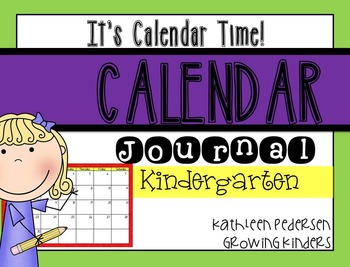
Everyday we start our math block with this awesome calendar journal from Growing Kinders. Then we complete a daily math journal from my math journal pack here:
Then my students work in small group with me, or on one of our math centers.

Daily 5

I use the Daily 5 model for our literacy block and I have to say it is one my favorite times of the day.  My students are always nice and calm during Daily 5 which is why I moved literacy to the afternoons.  Math centers always got so crazy when students were all wound up from lunch and recess, so moving them to the morning was also a great decision.  

Inquiry

Our district was moving towards an inquiry based approach to teaching in the content areas which I loved, but still had to put my kindergarten spin on it.  I always taught thematically.  I enjoyed it, the kids enjoyed it, so I tried to find a way to make that work with the inquiry model.  Here are the themes I used.

Read Aloud

I always end the day with a read aloud.  As students pack up their bags and get ready to go, I begin reading.  This helps quiet students down so my room doesn't turn into a zoo.  It also gives me something purposeful to do for the last few minutes while students are being picked up for buses, or after school programs. I try to pick a chapter book that relates to the season or themes we are learning about. I choose frog and toad at the beginning of the year so that students get used to the routine with shorter chapters that often have a few pictures to share.  Later in the year I read Charlotte's web, Charlie and the Chocolate Factory, etc.

Hopefully this was helpful to you in some way. I know I am always curious to see how other teachers structure their day, and usually get ideas for tweaking my own schedule as well.  Happy planning friends!

What I love About Teaching: Creativity in the Classroom

Happy February 19, friends! It's Melissa from Mrs. Dailey's Classroom and today I'm sharing one thing that I absolutely love about teaching! 

For me, teaching is like being on a stage where I design the entire set. I get to preform on a daily basis, but I also get to choose what my work space looks and sounds like. If I want to have music playing during writers workshop, that's fair game! 

To be honest, I feel lucky every day that I go into work, and even a little guilty! I know my husband, like many others, are heading to a cubical. That work life is not for moi. 

I love that I can make my own schedule under certain perimeters. In the beginning of the year we're given a language arts, math, and content area block. The fun part is that I can decided what to teach when as long as I follow the district and state standards. So, for example, if I want to start my day with a read aloud and then move into phonics, that is perfectly fine! 

I am totally in love with connecting with other teachers inside and outside of my building. This year our class was involved in Simply Kinder's Gingerbread Exchange
Currently, we are involved with a 50 state postcard exchange from The Learning Chambers. The Indiana postcard came in today! Speaking of Indiana, I'm so excited to be going to an Indiana blogger meetup in March hosted by Mrs. Ehle's Kindergarten. That will be so much fun!!

Another way I love being creative in the classroom is by improvising when needed and using my own resources. Supplementing is my middle name! I make sure to use the resources offered by my district, but fully appreciate that my principal trusts me to make instructional decision based on my student's needs. I'm able to swap out or add in resources as needed. I made these wipe away -ui phonics strips for my students since we are working on that sound this week.  

I find that each year I change up my behavior management system. Outside of individual behavior charts, my whole class has a number and is part of our "Daily Behavior" classroom chart. I like experimenting with new systems each year to see what works best and what my students respond to in the classroom.
And speaking of behavior systems, I found these desk check cards from All Students Can Shine. When the desk fairy, ahem-me!, sees a clean desk, I leave this sweet note and a shiny new pencil for the student. I love these cards and have them hanging around the room to remind the students that I'm always looking for the next clean desk. 
I hope you enjoyed these ideas and I'd love to hear from you! What do you in your classroom that is unique to you or that you'd like to share? You can take a photo, share it on Instagram, and tag me so that I can see it and leave you a sweet comment! I'd love to see your classrooms!