Facebook Pinterest Instagram Bloglovin' Teachers Pay Teachers Image Map
Showing posts with label science. Show all posts

Sensational Science with KookyKinders!


.

Science is a fun learning opportunity in kindergarten. Hands on learning is the most effective way to get my students engaged and excited. This year we were lucky enough to have science students from the local college come into our classrooms and assist/teach science lessons. 

One of my favorite activities this year was releasing our butterflies.


.

Our garden in a bag was very successful. I was so happy that I didn't have to drag a bag of dirt to school!


We loved exploring seashells and sand!


What do you do for science in your classroom?


Sensational Science with Mrs. Grooms' Room!


Hey everyone!  

Are you ready for summer????  I know I am…this girl is ready for a relaxation vacation!!  But we are still working hard on our unit in science…THE SOLAR SYSTEM!!! It is the very last unit that we do in the year and it is one of my favorites…it is OUT OF THIS WORLD!!  (Pun totally intended!)


Here are some things that we are doing to learn all about our wonderful star.
We made suns with beautiful rays and we wrote facts on them.  They are so easy to make and they truly brighten our day! 


Of course, we also LOVE the song by the Storybots!! Our entire first grade is loving the song,  “I'm so Hot!”  Have you heard it?  I just have to sing and dance along with my students!!!  That is probably not so hot.  Ha!


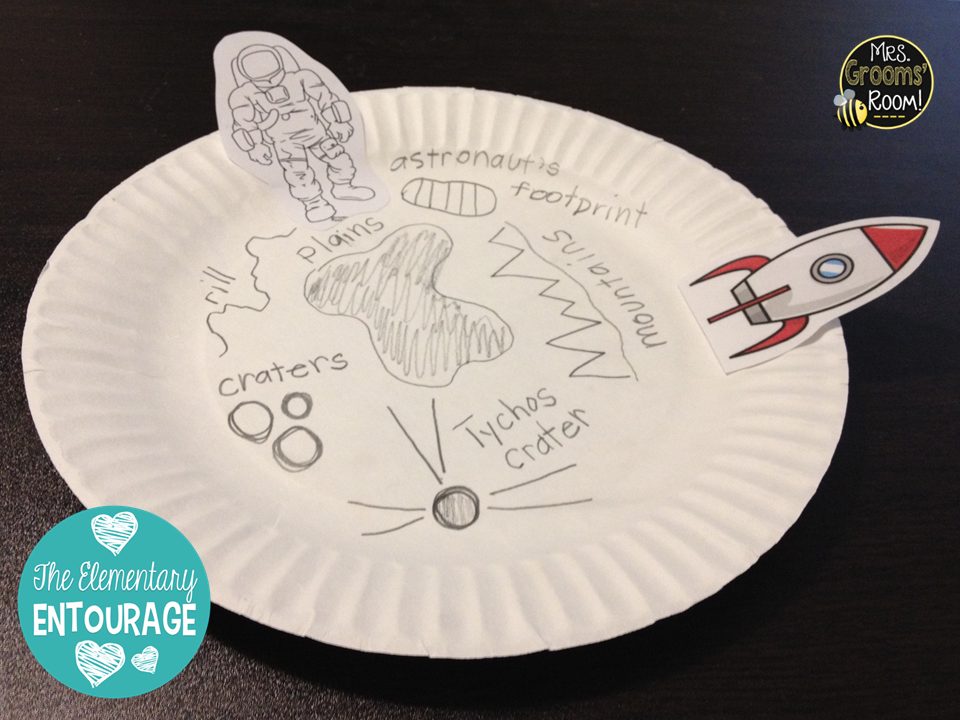
We have also been learning about the moon and some of its amazing facts!  We learned about its landscape, too. We made a model of a moon. It is simply a paper plate, but the kids learn so much about the moon's landscape.  There are craters, mountains, plains, and cracks on the surface of the moon. The kids love to label and draw the landscape of the moon.  (My favorite part is drawing Neil Armstrong’s footprint!)  


Then of course, since rockets and astronauts have also been on the moon, we make sure we have a rocket and an astronaut.  You can find a newer version of the astronaut and rocket here to download for free!!  

To top it off, we have to play their favorite song by the Storybots, of course, and it’s called “It’s My Time to Shine.”  Seriously, click on it and you will be humming this tune all day!!  


We have been tracking the moon phases diligently each day.  My students “oooh” every time they see the new moon phase. It is waxing right now and they LOVE seeing it get bigger. Pretty soon it will wane and our moon will be just a lonely moon or a New Moon.  (They learned that from the Storybots!  Ha!  Not me!!) We draw it and date it on our record sheet.  


We use the app called, “The Moon” to record the phase of the moon that night.
If you would like to use it, you can find it here.  AND it's FREE!!  You can find this particular moon tracker here! 


.  


It's so much fun learning about the solar system and the fun hasn't ended yet. It has been a BLAST learning about the universe around us!  What are some of your favorite ideas and activities when you teach the solar system?  


Sensational Science: Ocean Fun


One of my favorite units of the year is our Ocean Unit! We cover everything from the kelp forest to the deep, dark abyss. 

Ocean Unit

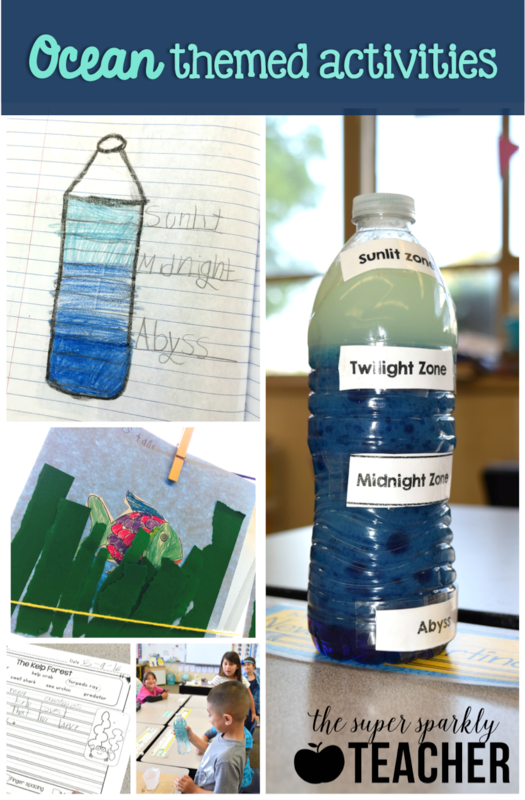
We begin our unit by introducing the zones and making Ocean in a bottle. It's so much fun and my students love being involved in the process. All you need is a water bottle, vegetable oil, and blue food coloring. I had each group of students make a bottle for their table. I got this idea from A Day in First Grade.

Ocean Unit activities

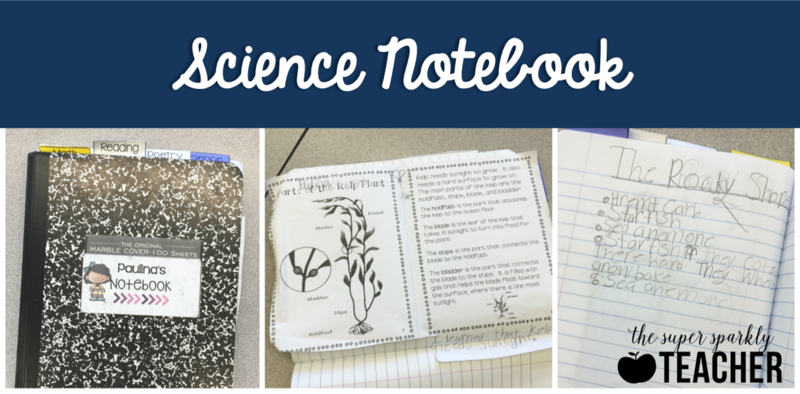
I enjoy having students collect all of their materials, so we added a Science tab to our Interactive Notebooks. We added articles (which I printed two to a page in order to make them fit). We've drawn diagrams, written lists (yes, my students know what "bullets" are) and expository pieces about the zones and animals we've learned about. Our focus has been to identify the adaptations of the animals and how they help the animals to survive in their environments. For instance, the kelp crab has long legs which help it to attack predators.


I created a pack of writing papers to accompany this unit. And it's FREE in my TpT shop {Click HERE}. We chose an animal from each area and shared information about its adaptation(s). The paper was folded in order to fit it into our notebooks.

Ocean unit
This student has come a long way. So proud of her progress!

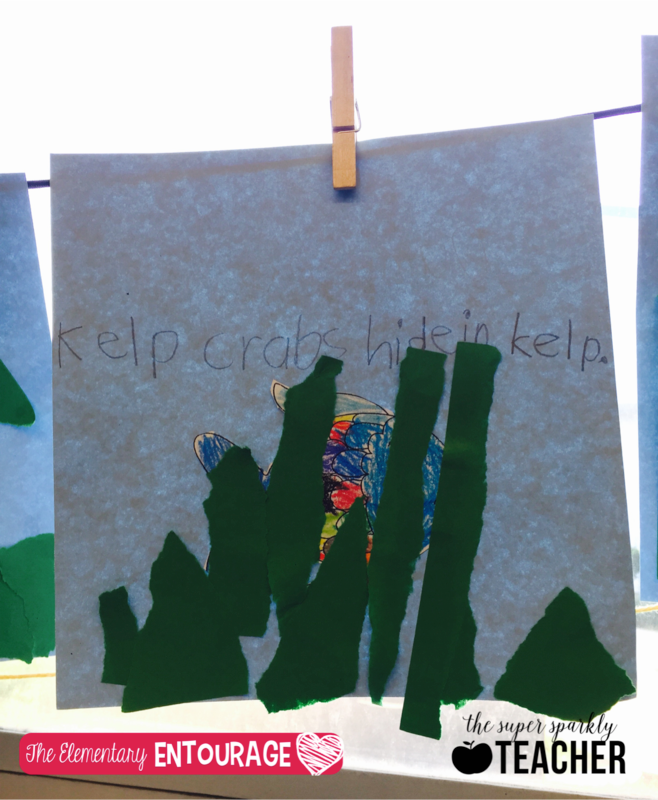
I love integrating art as well! We used a copy of a fish, blue and green construction. The students tore the pieces to make them look like kelp. I extended the activity by having students write a sentence about our discussion from the previous day.

ocean unit of study

If you're looking for more Ocean Unit ideas just click the button below. Happy pinning!


Sensational Science: Inclusion (with Mrs. D's Corner)

Let me be honest... I teach a self-contained class of students with special needs... and we don't always have time to get to science lessons (outside of ELA or Math instruction). I know, I know!

Thankfully all of my students are slated to go out of our class for at least 45 minutes a day to attend a science inclusion class. It's great! The kids get to interact with their same-aged peers and they're getting to do experiments and learn all of that science-y stuff.

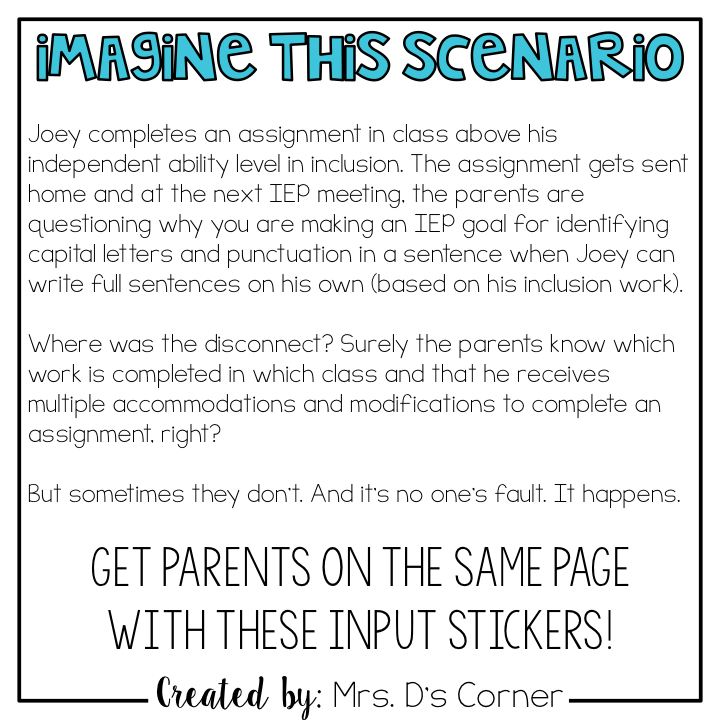
But sometimes there's a downfall... and it's not necessarily a bad thing, it's just a miscommunication.
Have you ever had that happen to you? Or have you ever sent something home above your student's ability level that they worked on 1:1 in inclusion and wondered if the parents knew how accommodated and modified the assignment was for their child to complete the work?!

There's no more guessing, from you or the parents. Now you are all on the same page, which is such a wonderful thing!
https://www.teacherspayteachers.com/Product/Communication-Stickers-from-Teachers-to-Parents-Special-Education-2542725
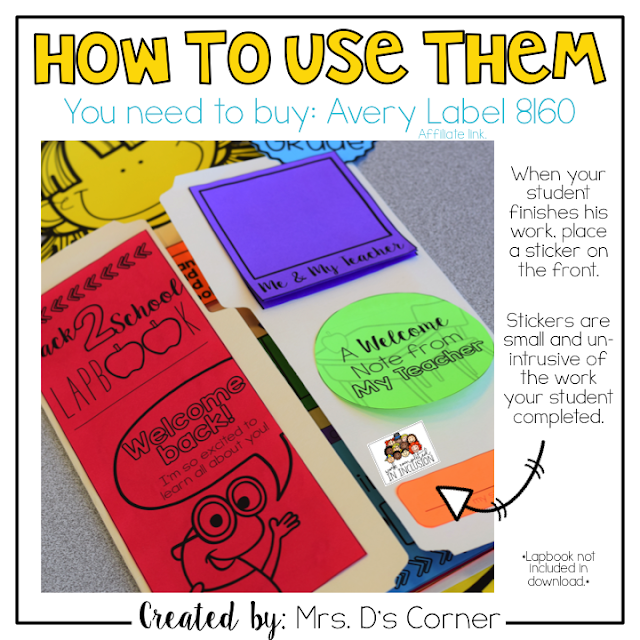
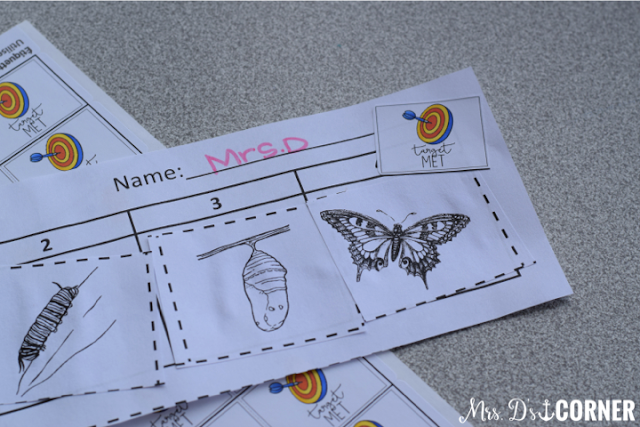
See that sticker? It's small and un-intrusive to the integrity of the student's work... but it clearly labels the work that was completed in inclusion.

There are other stickers too!
https://www.teacherspayteachers.com/Product/Communication-Stickers-from-Teachers-to-Parents-Special-Education-2542725
You can let the parents know exactly what they need to know, without writing a note, sending an email, or calling home.
https://www.teacherspayteachers.com/Product/Communication-Stickers-from-Teachers-to-Parents-Special-Education-2542725
There are 35 different stickers included in both color and black and white. All you need is Avery Label 8160*. Print, cut on the line included to double the amount of stickers you get per sheet (so instead of 30, you get 60 stickers per sheet!), and now you're ready to communicate with parents!
https://www.teacherspayteachers.com/Product/Communication-Stickers-from-Teachers-to-Parents-Special-Education-2542725
These are all of the stickers you get... and now science inclusion - or any inclusion setting your student travels to - is set and ready to go!

I'm pretty excited to have these all printed up and ready to use the remainder of this year, and then really get communicating next year. I just know it's going to be super effective and the parents will appreciate knowing more about their child's school day.

{ Grab the Communication Stickers here. }

*affiliate link*

Sensational Science {with iTeachSTEM}

Quick review...
iTeachSTEM.
Like, every day, every class.
STEM.
So could this topic be any more perfect for me to blog about?!?
Students complete different interactive notebook templates and review sheets to help further solidify their understanding of each organelle of a cell and it's role in the plant and/or animal cell.
Absolutely!
And you'd think I would find it easy, right?
But noooooooo.
Leave it to me to struggle trying to narrow down what I actually want to share with you wonderful readers.

I've been brainstorming ideas for weeks now to no avail. My solution? The other day I asked my students to write an informal essay telling me what their two favorite units from fifth grade science were and WHY they liked them so much. #worksmarternotharder

The top three units were...
It's a whole lot easier to make a choice when it's narrowed down to THREE instead of "everything I've ever taught in science"...

So today I share some of the fun ways I teach about plant and animal cells.
Honestly, it's one of the first units I teach each year and I really DO love it.
Students complete different interactive notebook templates and review sheets to help further solidify their understanding of each organelle of a cell and it's role in the plant and/or animal cell.

Here's the catch, though...
My fifth graders have already LEARNED about cells in fourth grade. The only difference is that in fifth grade we add in the mitochondria to the list of organelles. I hate to literally repeat what students have done in the past, so I try to find creative ways to review what they (should) already know from FOURTH grade before "digging deeper" into the cell and what they should know in FIFTH grade.

I like to start my unit on cells by asking students to classify cells as either plant or animal cells based on the structure of each cell. In fifth grade, that means understanding that a plant cell has three specific differences from animal cells.

1. A plant cell has a cell wall that provides structure and added protection to the cell.
2. A plant cell has chloroplasts filled with chlorophyll where energy from the sun is used to create food for the cell through photosynthesis.
3. A plant cell usually has 1-2 larger central vacuoles rather than many smaller ones as in animal cells.
Usually after a think-pair-share, we are able to complete the notebook pages shown below (with a little guidance from me).
Students complete different interactive notebook templates and review sheets to help further solidify their understanding of each organelle of a cell and it's role in the plant and/or animal cell.

My students have a great time acting like Crime Scene Investigators as they try to determine which cells found at the location of an imaginary burglary are plant cells and which are animal cells. My favorite part of the CSI Challenge is that students are given actual images of plant and animal cells to work with. I have found that more often than not, students have the misconception that a plant cell is rectangular and an animal cell is a circle. They fail to look at the specific organelles. Also, most students have only had experience with drawings and/or diagrams of cells, so seeing actual images taken by an electron microscope forces them to apply their understanding in a different situation.
Students complete different interactive notebook templates and review sheets to help further solidify their understanding of each organelle of a cell and it's role in the plant and/or animal cell.

Another favorite activity for my students is "Let's Take a CELL-fie!" Come on, it's cheesy, but it's funny too! Students liked this activity because they got to work in groups to use a really cool app called "ThingLink" to create an interactive image. I liked this activity because students actually start to remember the functions of each organelle since they must select objects from home that have a similar "job" to be used in their group's "Super Cell". Here is one of the better examples of "CELL-fies" from this year.
Students complete different interactive notebook templates and review sheets to help further solidify their understanding of each organelle of a cell and it's role in the plant and/or animal cell.
If you'd like to read more about creating interactive images using ThingLink, check out this post.


I like to use lots of analogies and ask my students to do the same. I also display visual vocabulary posters on my word wall so students can reference them as needed. Each poster includes an analogy that compares the organelle's function to an other "real life" job.
Students complete different interactive notebook templates and review sheets to help further solidify their understanding of each organelle of a cell and it's role in the plant and/or animal cell.

Throughout the unit, I have students complete different interactive notebook templates and review sheets to help further solidify their understanding of each organelle of a cell and it's role in the plant and/or animal cell. I love this activity where students imagine what each cell organelle would say if it could actually talk. Students were super creative and quite accurate for the most part. Here are a couple examples of student work.
Students complete different interactive notebook templates and review sheets to help further solidify their understanding of each organelle of a cell and it's role in the plant and/or animal cell.
I love the bossy nucleus in this one: "Hey! Mitochondria! Scoot over! I control the cell! Don't do that!"
Students complete different interactive notebook templates and review sheets to help further solidify their understanding of each organelle of a cell and it's role in the plant and/or animal cell.
My favorite from this one is the cell membrane: "Party's full, dude!" since the membrane regulates what enters and exits the cell.

Students complete different interactive notebook templates and review sheets to help further solidify their understanding of each organelle of a cell and it's role in the plant and/or animal cell.
The activities from above (and a whole lot more) are included in my Cells Bundled Kit. If you'd like to take a closer look at what's included, check it out HERE.

I hate to disappoint anyone who might have been hoping that I'd share how I teach the solar system or states of matter, so here is a link to some of my favorite resources as well as the Pinterest boards where I store even more great ideas for these units!

https://www.pinterest.com/iTeachSTEM2kids/stem-states-of-matter/https://www.pinterest.com/iTeachSTEM2kids/stem-cells-photosynthesis/https://www.teacherspayteachers.com/Store/Iteachstem/Category/STEM-Solar-System-235840

I hope you found some of the ideas here inspiring, because when a teacher is excited and motivated to teach science the students also look forward to learning more about science concepts.

Sensational Science: Ocean Slime!


Every Friday in our classroom is Mad Science Friday!   I dress as a mad scientist and we do a hands on science experiment!   The students are involved in the experiments and we get our hands dirty doing some science!

We are in the middle of our ocean unit so we made ocean slime!


You need:
clear Elmer's Glue (1 bottle per color of slime)
liquid starch (1/2 cup per color of slime)
liquid watercolor 

Simply mix the glue and watercolor in a bowl.

Then add in starch slowly.  As you mix it will get harder to mix with your spoon.  When this happens start kneading with your hands until you reach your desired consistency!


We took our slime out of the bowl and mixed it!  


Everyone got their own container of slime to play with and take home!

TIP:  Do not throw the slime onto the ceiling tile.  It sticks.  Then drops into your hair.  And leaves a stain on the tile.  Just sayin...