Facebook Pinterest Instagram Bloglovin' Teachers Pay Teachers Image Map
Showing posts with label reading log. Show all posts

Making the Most of Small Group Instruction {with Core Inspiration by Laura Santos}


About 60% of our second grade day is spent in small group instruction. Although this teaching approach is highly targeted and differentiated, it is also intense to plan and deliver. Over the past few years, I have evolved from a teacher who hated small group instruction to one who fully embraces its undeniable benefits. 

The driving force behind my growth is organization and the development of unique small group instruction management routines. The tricks below have helped make the management aspect of small group instruction more...manageable. But first, here is a peek at the two small group instruction areas in my second grade classroom:


Our reading aide meets with small groups four days a week in at the reading table. During their time with her, students are currently participating in scaffolded literature circles. Each day, they read a chapter, work on their Guided Reading Journal (filled with reading response activities that give them practice with reading concepts they have mastered), and then participate in a guided literature circle discussion and activity. These are the supplies my students use at the reading table. 


I meet with small groups in our Mini Lesson Zone. I don't mind sitting on the floor and the kids love it so we sit side by side during our reading conferences, use the table if there's anything we need to write down, and refer to our mini lesson notes/posters on our easel. Anyone who's waiting for their turn to meet one on one with me reads at one of the placemats so they can quickly join me when it's time. 


My small group instruction is more like individualized instruction, therefore students are required to bring their own book bins and journals. 


Whiteboard markers, highlighters, and pencils are provided so students don't waste transition time gathering these supplies. 


Okay, now that you have an idea of where small group instruction takes place in my second grade classroom, here are the details on how I keep our small group instruction time running smoothly. I’ve set these details up as solutions to common small group instruction problems or roadblocks.

Problem: My students do not transition quickly during small group instruction.

Solution: PowerPoint Transition Slide Deck

Use PowerPoint to create visual reminders for students. Saving these reminder slides on your computer and displaying them specificlly during the instructional time they are needed reduces the need for posters and clip charts that are only used for a short time during your school day.


I use this slide deck during Daily 5 and have a similar deck for Math Workshop. It is my absolute favorite classroom management tool. The deck is filled with slides that are connected by a series of timed transitions and sounds effects that signal when it is time for a brain break or for a new round of Daily 5 to begin. At the start of Daily 5, I simply click play and the slide deck keeps track of time, makes peaceful noises that signal when it’s time to transition (so much better than having to say it...the less we talk...the better), gives a visual countdown, and shows who should be working in the small group areas.  I’m not going to lie, creating this originally took me more time than I’d like to admit...but now that the templates are created, it takes less than five minutes to change small groups based on assessment results.

Problem: I work on different activities during small group instruction time each day and my students forget what they are supposed to bring to the small group area.

Solution: Visual Reminder Posters


Post a sign that informs students which activity they will work on each day, the supplies they need for that activity, and what they should do while they are waiting for their instruction to begin. Once again...save your voice for the important stuff...the less you have to use it for silly verbal reminders, the less likely you are to sound like the teacher from the Peanuts cartoon.
I hang these signs on the whiteboard behind me near our mini lesson zone because each time my students meet with me, they need different supplies.
  • Their own Word Pocket (for Words Their Way instruction on Monday)
  • Their personalized book collection (for reading conferences on Tuesday, Wednesday) 
  • Their personal Word Collector’s Notebook (for collecting words in context and their weekly mini assessment on Thursday, Friday). 
In honor of this blog post, I created a sign for the reading table where my aide hosts her small group instruction. This sign is simply a reminder that students should work in their Guided Reading Journal while they wait for other students to finish their reading in preparation for their group reading response activity. She uses guided reading books and literature circle books so students don’t need to bring anything with them when they visit her.

Problem: My system of using bins to store supplies for reading groups isn’t working.

Solution: Get smart with your classroom furniture. 


Find furniture that reduces classroom clutter and keeps you organized. This 5 Bin Storage Tower from The Container Store is an easy way to keep supplies together for your reading groups without having to deal with overflowing bins that create visual noise in your classroom. Each day, you can gather the supplies for the small groups you will be instructing and tuck everything out of sight once small group time is over.

In my classroom, this tower is used solely by my reading aide. To keep our storage tower optimally organized, I added a group label to each bin and have each group’s literature circle books and Guided Reading Journals inside. I keep student work out of folders because it removes an extra step when I need to quickly assess student work. If work is tucked inside a folder, I tend to forget about it…#teachertruth.

I would love to hear from you about any additional roadblocks you may be facing during your small group instruction time. Please also share your unique solutions to the roadblocks mentioned above. Can’t wait to hear from you!


Homework in Kindergarten {Alex from The Kindergarten Connection}

Homework can be a highly debatable subject in the education world! Just as there are parents who love it and parents who don't, there are also teachers who love it and teachers who don't!

What to do? 
\

In all honestly, as a teacher, I am not a huge fan of homework, especially not for full day kindergarten students. Now that many kindergarteners attend school all day, 5 days a week, I feel like they really need to go home after a long school day and just PLAY. Go outside, run, jump, yell, and spend time with family. 

I do also understand that sometimes it can be helpful to set up "school night routines" and I also know that reading at home is crucial to early literacy.

So, my version of homework is "School to Home Book Bags!" 


I used to send home a nightly reading log. However, while some parents filled it out, there were many who forgot, or it got lost, eaten, left on the bus - you name it. 

Plus, after awhile, they just weren't that FUN. For some classrooms they are - but mine were losing their touch! 

I needed something to motivate kids to read at home and encourage their parents to read to them as well. 

My teacher next door told me about take home book bags, and I was hooked!


Each school day, the kids may take home ONE book from the classroom. I know what you may be thinking at first. "EEEK! My books! They may lose them!!" I have not had that happen yet.

They are not allowed to borrow another until they return the previous book, so they are very motivated not to lose them!

However, if you have a limited selection of books, there are sites like Reading A-Z that you can print books from and avoid the issue altogether.


Each student gets a ziploc bag with their name (cheap and easy to replace if they rip, etc) to store their book. They also get a reading log that their parents can help them fill out with the date and name of the book they read (it can be one from home or the library too)


The reading logs always stay inside the bag. They get changed out monthly.

My kids may change books every single day, every other, or however often, but they may only have one book out at a time.


I have found this to work very well for my class. I have some students who may not have a lot of books at home, or need an extra bit of motivation to get interested in reading with mom or dad.

This provides a boost of excitement, and parents also like it because they get to experience new stories with their children.

Plus, we know how important it is that kids are reading and being read to!

You can download your own copy of the book bag from HERE if you are interested!


Homework... to give or not to give? {Stephany from Primary Possibilities}


Homework.... always a hot debate with teachers, parents, and even students.  No matter your opinion or take on homework, you will never make everyone happy.  You have to find the perfect balance for your classroom and for yourself.  This year I chose to go with a Reading Folder as my daily homework.  I looped with my students from last year and knew that their biggest need was reading fluency.  Because of this, I chose to make this the main focus of my homework.  

I included these great literacy handouts in my homework folder.  I printed them on colored paper to emphasize their importance and have the students keep them in their reading folder.  They include awesome tips for parents and students to use while reading at home.  


These are from a great FREE resource from Primary Punch.  You can click on the image below to go grab it up! 


In addition to the literacy handouts, I include a Daily Reading Log.  Students record the date, title, their feelings about the book and if they are ready to take an AR test over the book.  Once we got rolling with this in the morning, it was awesome!  The students are learning how to choose books that are appropriate and interest them.  They are also learning to be responsible by filling out their reading log and switching out their book each day. 


  (You can click on the image below to download the reading log for free!)


How do you use homework in your classroom?


To Give or Not to Give...Homework {A Kindergarten Perspective}

So I'm going to be completely honest here people...I'm not a huge fan of homework for little ones...especially kindergartners! More and more free time, recess and social interaction is being taken away from our littles and they really need it! So that being said I try to encourage parents to give their children time to be active and get outside after school.  But inevitably, so many parents actually beg for homework. I mean it is great to see that they want to be involved in their children's learning, so its hard to argue with that.

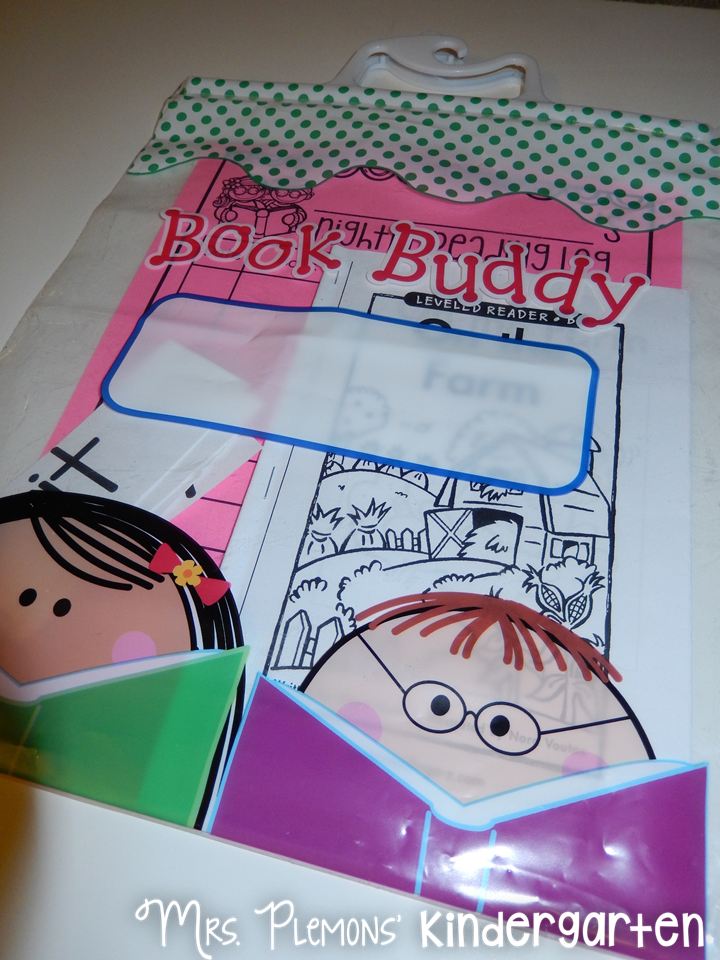
My solution is nightly reading homework which realistically should take no more than 10-15 minutes/night.  Totally doable on the car ride home, or while mom is cooking dinner. Here are what my reading bags look like:
And here is what's inside:
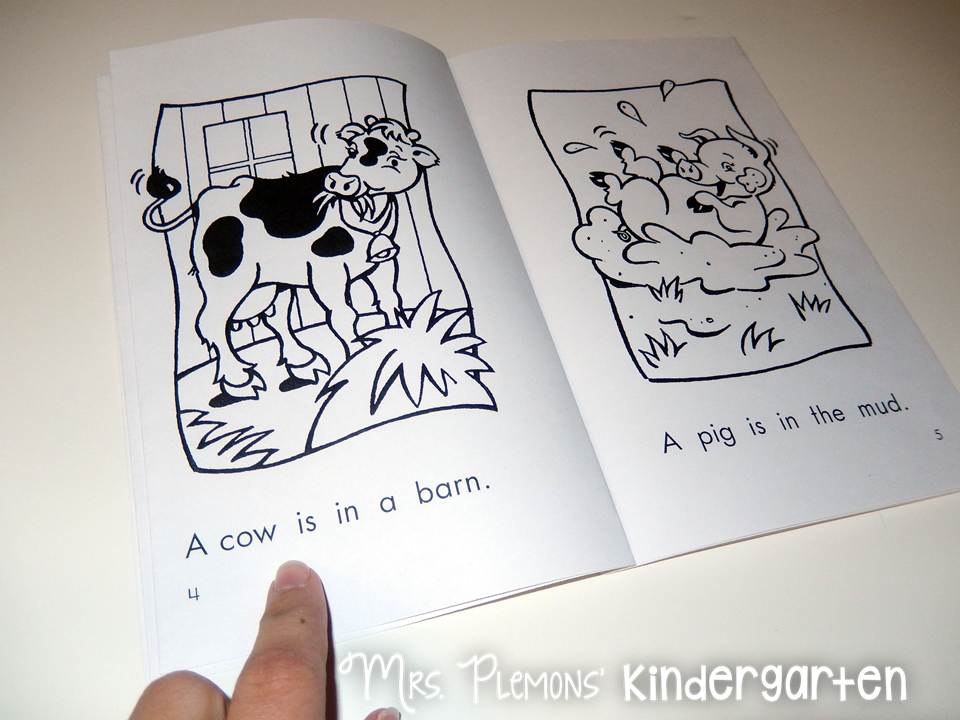
First, I include a leveled reader that is at students INDEPENDENT reading level, not instructional.  I do not want my students to struggle through their homework anymore than I want parents struggling to help their child read.
Now don't get me wrong there are definitely parents that are great at coaching their kids through a book, but there are also those that say "sound it out" 392 times when the word is "some" and can't possibly be "sounded out."  So I send books that students will feel successful with as fluency practice.  I use the printable books from Reading A-Z because I don't have a huge leveled library in my classroom. Unfortunately no matter how hard I try to teach my kiddos to take card of the books, inevitably some get lost, come back missing pages, have their baby sister's beautiful artwork all over them, fall in a toilet, or whatever other kind of mayhem happens in real life with a five year old.  I do ask students to bring the books back, but I have printed 5 copies of each book from Reading A-Z and bam no worries when they go missing, I just print more!
Next is a nightly reading log.
Every night that students read, they write the date and title of their book. (Side note: I like to encourage students to do it themselves for a little extra writing practice, especially those with some fine motor issues.) Then parents sign and when I see it at school they get a sticker. There are 10 spots on a page so if a student reads every night they fill it up in two weeks and get to chose a Reading A-Z book to take home to keep! That's right the prize is more reading ;) The best part is they can actually color in their book when they take it home....ooooohhh. They're always dying to color those little readers so this is actually  big deal in their little world. Gotta love kindergartners!
You can grab my printable reading log FREE here.
The last thing in the bag is a sight word ring.  At my school we teach 2 sight words a week and expect our students to know 75 by the end of the year.  I add 2 words to each bag each week and students add them to their ring when they get home.  After reading their book each night I ask them to  quickly practice their sight word ring.  Every so often as I reassess the words my students know I will go through and the words off of their rings so they don't grow to be too big. No need to drill the same sight words they've known consistently for months!
And there you have it! Easy peasy homework in kindergarten.  I will say that I do have a small packet of worksheets that I send home with students in case parents really want some more work for their kiddos, but I don't really spend much time checking it in or looking through it.  I find that those pages are more for students to practice and show their parents what they can do, so I try not to spend too much time dealing with the paperwork of it all. The packet usually includes handwriting page, a sight word page, a math page and a writing prompt each week. Nothing too fancy!