
Facebook Pinterest Instagram Bloglovin' Teachers Pay Teachers Image Map
Showing posts with label Planning. Show all posts

Differentiation in the Classroom for your Teacher Evaluation Rubric!


You can google differentiation and see tons of ideas, photos and lesson suggestions. You can seek new ways to improve your techniques and approaches to reach new learners or ones you feel you haven't reached enough. I do it, visuals are my daily PD. I have ideas or questions and I search. I need to see models or how other educators do things since I'm in my own classroom all day. This is great! But, when it comes to being marked on your evaluation, differentiated instruction means more!

This blog post is going to share a suggestion for differentiating in your classroom when it involves best practices with your Teacher Evaluation Rubric. My suggestion will show you an easy way to understand your Teacher Evaluation Rubric with differentiation. 

Differentiation on your Formal Teacher Evaluation Rubric

Every teacher is evaluated on a series of components based on multiple formal and informal observations each school year. Every teacher has a component of differentiation as a piece to their yearly evaluation. What I am clarifying here, is we as K-12 educators are all evaluated the same way but by a different tool with different wording depending on where you work. 

As a Reading Specialist and prior Literacy Coach, teachers always came to me about their rating in this category. Their questions always came back to the same thing...

Teacher: "I'm using my reading level data to form my small groups!" Me: "Awesome, that's great! You are delivering direct specific instruction based on your formative data of where the children are in reading level growth."
or
Teacher: "I'm using my quarterly formative data to form my small groups! Me: "Awesome, that's great! You are delivering specific instruction based on your formative data of standards your students are missing."

Sound familiar? Well, the above examples are truly great teaching! But, it's only part of the component of differentiation. It is the part of the component in your evaluation that is predicted differentiation based off of data. 

But there is another part and it sounds easy, but it's tough. It is usually the difference between obtaining the highest rating in differentiation or not.

Have you seen this on social media? This image is from TeachThought!

(click the photo for a direct link)
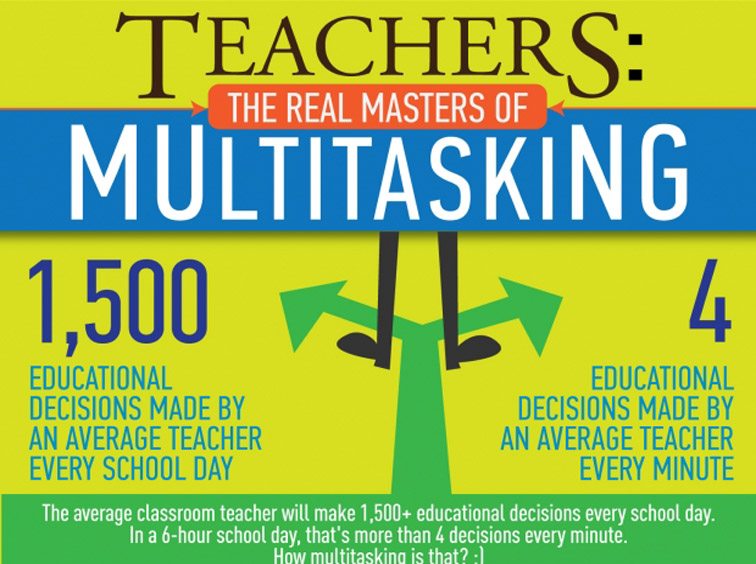
Image result for teachers make decisions a day

It's true, teachers make so many minute by minute decisions a day about everything. Now apply this to a lesson!

Let me make it a little clearer and break it down:
  • When planning a mini lesson you need to add an area to your plan. Title it something like anticipating misconceptions, re-teach, etc...
  • Plan for students to not master your lesson standard or objective [Yes, plan for failure! Plan the reality, everyone is not perfect the first attempt]. In this plan note exactly what you will do that day for students with misconceptions or failures. Then note what you will do the next day if misconceptions or failures continue.
  • Now, prep resources for this group of students [Regardless their formative data or reading level.] Have a little area or spot at your small group table for this random group. This random group will be in the moment so you will need to be ready. You don't know exactly who will have misconceptions this day. It could be your low kid or your high kid.
  • Do your whole group lesson. During the lesson activity, have documentation of some sort by your choice. This can be in the form of anything anecdotal like a status check, roster, standard checklist, etc... By oral and visual observations note and rate who has it, who kind of has it and who does not have it. This can be any rating system you want. 
  • A big key... The students have to also be self assessing. Students need to rate themselves. This could be by a number rubric, color rubric or etc... You need to see how students internalize their work as well in comparison to the expectation. 
  • Now, the work period is ending. This is when you will send those who found success on to their independent time, stations, centers, etc... You will pull the students with misconceptions. It will end up being an immediate intervention in a way prior to starting your regular scheduled differentiated groups based off of reading level data or formal data.
(The same concept applys for Math!)

This is differentiation in action, planning for misconceptions with instant instruction to remediation then and there. Why is this hard for teachers? Well, time! Time to plan for your mini lessons and small groups is enough. Now your adding planning ahead for the unknown as well. But, I feel it is challenging because it's hard for people who evaluate using these fancy formal teacher rubrics to explain in a simple form to teachers. There's no real model for it unless you receive PD that is real and not from a PP or you happen to observe it yourself. Lastly, it's a game time in action observation. So it's hard to share with teachers what this would look like. 

Of course, after this first group is done. Then you would continue on with your differentiation instruction of your "current" small groups based off of your formative and reading level assessments. 

If you are effective at doing "differentiated instruction" you need to be doing the known and the unknown. You need to be doing the preparation for what you know the students need based off of large pieces of data and you need to be doing the preparation for what you don't know your students need based off of regular daily mini lessons. 

Lastly, you need to have documentation to show your evaluator because they are not available every day to see this in action [I think photographs are better to show!]. Evaluators would like to see this on lesson plans noted and to see how you document to grab those students with misconceptions and intervene. 

This is tough, I hear ya! Sometimes I think teacher is not a good job title for us! Maybe juggler, physic or something else would explain what we really do all the time! I think this shirt explains it all!
(click on the photo or HERE for a direct link)

I hope this blog post gave you some insight that you can apply and you have found it helpful!

Teaching Then and Now {w/ iTeachSTEM}

Here are some tips for moving away from the teacher manual and moving toward more engaging lessons that will not only capture your students' attention but allow you to cater to their learning styles and personal interests.
Times have changed. Even in the eleven years I've been teaching, I've noticed BIG differences in how I plan and teach my lessons. Despite teaching fifth grade all eleven years, I have found that the way I deliver instruction and the way I check for understanding have not only changed but improved!

As I sat down to type this, I started to think back to when I was in high school. I always loved science. It was the class where I was able to talk to my friends, work in groups, and do experiments. I did well in those classes and when I had the opportunity I would sign up for extra science classes. So why was science more interesting? Because I was actually a PART of the learning process. I was engaged in what I was learning. I was applying the content during experiments. I was communicating with my peers.
When I first started teaching, my lessons came directly from the adopted textbook. I taught each lesson in order. I assessed using the provided tests. My lesson planning was super easy, though. I just wrote down the page numbers in the teacher's manual and moved on. But to tell you the truth, I usually spent my lunch and planning times stressed because I was trying to re-read and understand what on earth I was trying to get my students to do that day. Let's be honest. I was in survival mode - trying to teach all subjects every day to a group of fifth grade students who were almost as tall as me!
Here are some tips for moving away from the teacher manual and moving toward more engaging lessons that will not only capture your students' attention but allow you to cater to their learning styles and personal interests.
The problems was, students were rarely excited about my lessons. They listened, mostly. They practiced what I asked. They did homework. And they performed decently on tests. But they were B-O-R-E-D. And so was I! Let's be honest, reading a chapter and answering questions get old pretty quickly. For both students AND their teachers.
Here are some tips for moving away from the teacher manual and moving toward more engaging lessons that will not only capture your students' attention but allow you to cater to their learning styles and personal interests.
My teacher manual sits on a shelf behind my teaching station (nope, I don't even have a desk anymore). I think the last time I grabbed it was to show students a diagram in the book so they wouldn't have to dig for their own textbooks (that they rarely use). I plan each lesson using various resources. I include multiple learning styles and hands-on strategies. I spend time looking for ideas on Pinterest, TeachersPayTeachers, and Google that will enhance the lessons I already have developed. I have been able to take ownership of each lesson that I teach. Which means I am NOT spending my lunch stressing, but EATING (novel idea, I know).
But change wasn't easy. Letting go of a provided curriculum took a leap of faith and (gasp) a lot of work on my end. I needed to be sure that what I was teaching the students helped them to be prepared for those end of the year tests we all love (dripping with sarcasm). But, here's the thing. When students make connections to the content they are more likely to remember what they have learned and be able to apply their knowledge in various situations. It's a win-win situation.

Here are some tips for moving away from the teacher manual and moving toward more engaging lessons that will not only capture your students' attention but allow you to cater to their learning styles and personal interests. 

My first year of teaching I was the ONLY fifth grade teacher at a very small school. While I did my best to ask for help and work with other teachers, I was basically on my own. Not only was it lonely, but it was hard. I didn't really have anyone to bounce ideas off of or ask for input. I'm lucky that now I work with a great team of teachers. However, I am still the ONLY fifth grade STEM teacher. So I've had to get creative with how I collaborate. I have joined several Facebook groups where we can share ideas and resources. I also get together with other STEM teachers in my district on occasion to plan and develop activities.
Let's be honest, some of the PD classes are downright boring. We are just like our kids. If we can't see a direct connection between the content and our lives, we disengage. So choose your professional development activities wisely. Is there a new piece of technology you'd really like to integrate? Look for a class that focuses on that. Do you need a chance to meet with other teachers to develop lessons? See if your administrator will let you spend a half day collaboratively planning. Would watching another teacher help you improve your own lesson delivery? Find someone willing to let you observe them once or twice. Have you come across a great teacher's blog who has ideas that you'd like to incorporate into your own classroom? Read what has been written. Comment or even email the teacher with questions. You'll be surprised at how much you can learn from someone you've never even met in person!
Here are some tips for moving away from the teacher manual and moving toward more engaging lessons that will not only capture your students' attention but allow you to cater to their learning styles and personal interests.
And don't be afraid to share your OWN expertise. I just took a leap out of my comfort zone and led a session on interactive notebooks last summer. Not only was it a great opportunity to share my ideas, but it was amazing how many other approaches were shared that I have begun to integrate into my own classroom.
Good teachers do this automatically. We think about what went well and what didn't work as well as we had hoped. The key is to make changes based on your reflections. Since I'm the only science teacher in my grade level, I often share how things went with my husband. (Poor guy.) I tell him about the day and what I wish I had done differently. Sometimes just saying it out loud - even to a non-teacher like my husband - helps me to come up with ways to improve the activity.


The planning process has actually gotten much quicker for me over the years. Mostly because I take the time to reflect on my lessons and write notes to myself. I keep a journal for each of my classes, and save one from each year to use as a resource the following year.
Here are some tips for moving away from the teacher manual and moving toward more engaging lessons that will not only capture your students' attention but allow you to cater to their learning styles and personal interests.
When I am reflecting on each activity or unit, I jot notes to myself on Post-its and stick them right in the journal. That way when I open up to the pages, I am reminded of what I wanted to change and how I could improve the lesson. It's almost like a teaching diary!
Don't get me wrong. This is not easy. In eleven years of teaching, I still get bogged down and want to give up - at least once a week if not more. But then I remind myself that my students are learning and that the process is just as important as the end result. I also spend a lot of time in my teaching partner's room venting and bouncing ideas off of her. She's great for that!

My Lesson Planning Style {Tickled Pink in Primary}

I'm hope you have gotten a lot of ideas so far of how to organize your weekly, monthly, and yearly lessons. I liked to do my lesson planning in the middle of the week for the following week. This gave me a few days to make copies, laminate, and prepare for the week ahead, without having to come in on the weekend. I used to get to school about 1 hour early, use my prep period to work, not talk :) and was able to leave about 15-20 minutes after school ended. Don't get me wrong, I socialized with colleagues, but I also tried to use my time wisely. Being organized and prepared will save you hours of time at school. 

My last district had all the grade level teachers form committees to work on a curriculum map so every school was teaching the same thing at the same time. This uniformity in your corporation helps students that move around in the district. Here's a peek into how we set our Kindergarten curriculum. It was a lot work to get to this point, but now that it done, it is SO helpful! We have the time frame, skills, vocabulary, mini-lessons, mentor text, standards, extra resources, etc. already listed for us. How amazing is that?!?
Below are more detailed lessons that I would create for myself. I could probably just teach off of the curriculum maps, but I like to have it all spelled out and in 1 spot. 
At the beginning of the school year, I teach 1 nursery rhyme a week. That is something that I add in that is not in the curriculum maps, but they are just too fun to not teach. I do a variety of activities during the week to practice the nursery rhyme, sight words, sequencing, retelling, comprehension, etc. You can find these activities for 10 popular nursery rhymes in my Nursery Rhyme Bundle. 
One thing that saves me a ton of time is having my literacy and math centers all planned out for each month. I use similar games, so I can quickly change out a center for the new skill, and the students will already know the game format and directions. Creating and preparing centers can be very time consuming. I have bundled all of my literary centers into one bundle here and all of my math centers into another bundle here. 
 
I hope you have a great school year and that we have helped you find ways to save time and energy when lesson planning.

My Lesson Planning Style {Stephany from Primary Possibilities}


Raise your hands if you dread Sunday night...be honest.  It seems like no matter how much work you plan ahead on Friday afternoon, there is always something that sneaks up on you Sunday night that involves lesson planning... maybe it is a group of papers you forgot to copy for Monday, books you forgot to grab from the school library that you pray are not checked out, or a station you forgot to switch out. 

I have tried a lot of different methods of planning over the years but I always end up going back to digital lesson plans.  This forces me to get them all done at the same time and be more prepared for the week versus writing them in an old school lesson plan book.


I also use these forms below to plan for my small group reteaching during ELA and MATH rotations.  They are SUPER simple but they leave me a lot of freedom to make notes and switch things up from week to week.  (You can download for free here.)


Happy Planning!

Fresh Ideas 2015 {Amber from The Sunny Side of Second Grade}


Hi friends! Welcome back to our blog!! To finish up this month I have a question for ya. What do you do to keep your small groups dynamic?

We are all familiar with the importance of data. My literacy coach, she's the best in my opinion, has really taught me how to analyze data. Of course I am talking about our very own Dianna Radcliff. She has taught me how look at my data and arrange my groups that meets the needs of all students.

This led me to create a visual schedule to help manage the several groups I pull during the span of one day.

I take this schedule a bit further with each of the plan pages you see below. This week was the first full week I implemented this new scheduling and planning system... and it went beautifully. I took it to my team and urged them to take another look at their schedules to see where they could provide more intensive support.


Next to having your schedule and planning pages prepared is having your materials prepared. Below you will see some snapshots of how I organize my small group area for ease of access.

{Organize small group tools into baskets - writing, math, reading, and phonics}

{Organize your units and resources into binders for easy access}

{Label classroom library by genre with your guided reading sets labeled separately}

{Arrange weekly materials and group books and lesson plans in drawers or bins}

So my fresh idea is to revamp your small groups. Try to analyze your data at least once quarterly and keep your groups dynamic, or always changing. Your data changes...and so should your groups.

Don't forget to enter our giveaway for a free laminator!


a Rafflecopter giveaway

Get Planning {Amber from The Sunny Side of Second Grade}


Hey y'all! Happy New Year!!! I just wrapped up my first week back to school just in time for a long weekend to celebrate MLK. I love the year round schedule! Have I said that before? :)

This round of blog posts is geared toward planning and making your life easier. Let me first start by saying that, to me, organizing and planning go hand in hand. This post will have several pictures of how I organize my classroom to aid in planning. Let's do this....


If you are anything like me, a pretty planner and nice pens always make planning more enjoyable. If you have been following me for some time, you are aware that I typically do visual lesson plans. I stepped away from them this year and never looked back. I love planning in my Erin Condren planner. Notice all the colorful tabs! Oh yeah!!

Using your planning format, whatever that may be, you can begin writing down your thoughts for the coming week. I tend to start planning my small groups first. I begin with my SMARTIES and READING round planning pages.

{Click on any of the images above to visit my TPT store and browse these pages}
Because I teach in an inclusion class, the bulk of my instruction is done in small groups. These planning pages really help me keep my activities in stations on track. In addition, I can use the planning pages to specifically outline which skills we will be learning in small groups.

After I finish my small group planning, I plan my math and reading units around our grade level pacing guide. I pull resources that support those lessons. What better way to do this than to have everything organized in your classroom? I know we did some organization posts already, but really the two go hand in hand. Below are just some of the ways I keep things organized in my classroom to make planning a breeze.


Once you are organized, planning really takes care of itself. Just kidding! I could not put all my resources and thoughts together without this handy dandy checklist. I usually begin filling this out around Wednesday and start printing during specials on Thursday. Everything else is ready to go Friday morning for the next week and I am out the door right after the kiddos on Friday! YEAH!!!

{Click on the image to be taken to TPT}

Schroeder Shenanigans in Second is really a super woman in disguise in my opinion. She never ceases to amaze me. I really could not be as organized and thoroughly planned without this tool she so masterfully designed. Did I mention it is editable...SWOON!

I have learned that planning is really individualized. From computers to clipboards, every teachers finds their own method to the weekly madness we call teaching. Enjoy!